 GAMESLASH
Adobe MAX previews local MCP for Photoshop and After Effects; game-art workflow potential
By Adobe
Adobe announces third-party local MCP previews for creative apps and expands Firefly Graph beta workflows. For game creators, the key is editable assets; MCP private beta targets early 2027.
At Adobe MAX on November 10, 2026, Adobe previewed local Model Context Protocol (MCP) integrations for Photoshop, Illustrator, Premiere and After Effects. The plan is to let external AI agents operate these creative apps on the user's computer while keeping native layers, vectors, bins and sequences editable. This is a significant prospective change for artists preparing 2D game assets and motion sequences, but the local MCP integrations are NOT publicly released yet: Adobe says a private beta is planned for early 2027.
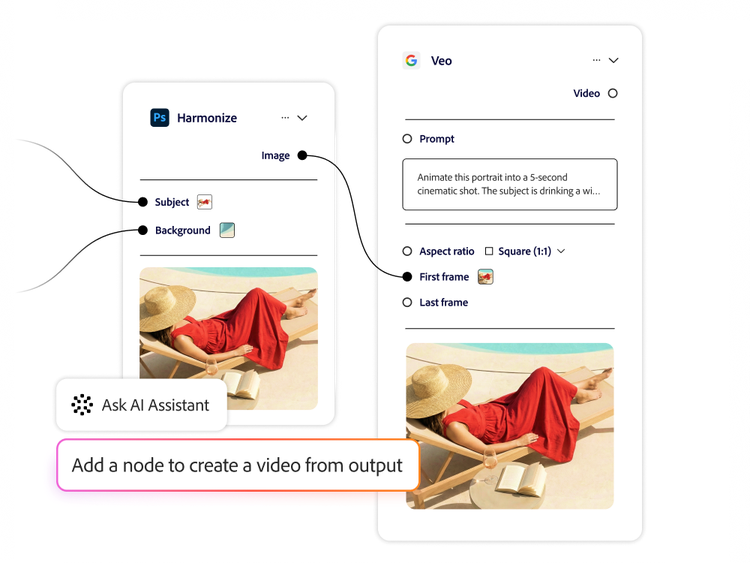
What was actually announced, and what is available?
According to Adobe's November 10 announcement, the Adobe Creative Agent already works in several desktop creative apps in beta, with Photoshop's assistant in the Photoshop beta app. The separate third-party local MCP integration is only a preview. Adobe says that once available, an agent could take a brief from a connected service, edit native projects in Adobe tools and hand work back without flattening all layers into a single picture. That workflow has not been announced as a shipping Godot, Unity or Unreal integration.
Adobe also highlighted Firefly Graph (beta), a visual node canvas for reusable AI-assisted workflows. Rather than repeating a prompt, creatives chain input assets, image operations and model steps, and can revise individual stages. Adobe specifically cites character studies and shot lists among its use cases. Firefly Graph for Enterprise already existed before this event; the November 10 news is the expanded beta capabilities and agent direction, not its first-ever launch.
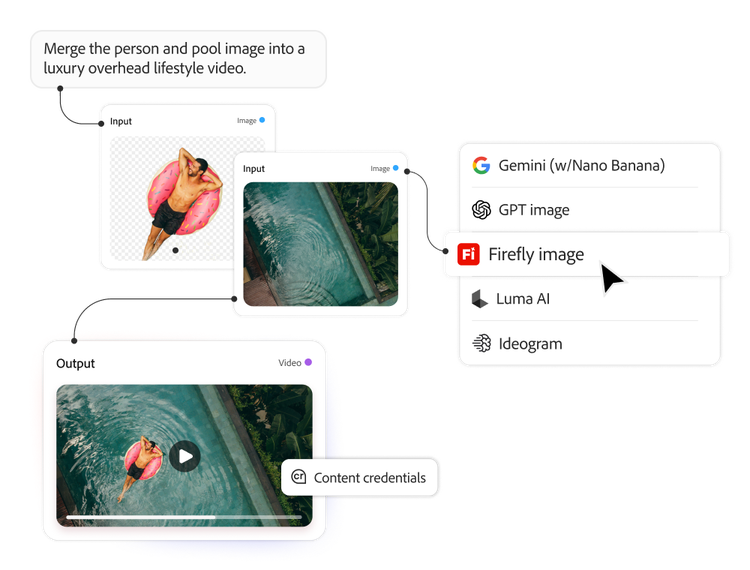
A practical game-art workflow to watch
For an AI-assisted indie game, a possible application is to prepare character reference studies, iterate separate art elements, keep editable layers for the artist and generate draft animation or cutscene shots. The key benefit would be retaining human control over assets and repeatability rather than obtaining a final production-ready game from a prompt. Actual sprite alignment, animation consistency, licensing, optimization and import into a game engine still need independent checks; Adobe has not released a ready-made game-engine export workflow here.
Access and important limits
Adobe says Firefly Design and Firefly Graph are in beta, Firefly Builder is in private beta, and local MCP integrations for third-party agents are expected in a private beta in early 2027. Firefly Graph for Enterprise has separate enterprise availability, so access depends on product and plan. The existing Adobe Firefly listing on GameSlash can help readers distinguish the general AI creative product from this new integration announcement.
These screenshots are Adobe's official Firefly Graph examples shown to explain the node workflow. They are not footage of a completed game or proof that the planned local MCP beta can already be installed today. See Adobe's original MAX release for rollout details.