 GAMESLASH
Could Games Be AI's Next S-Curve? Evidence from Google, Roblox and DeepMind
By GameSlash
Google–Unity's 2026 game platform, Roblox's interactive creation and DeepMind's world models point to a possible AI gaming wave. GDC data explains why an S-curve remains unproven.
Could gaming be the next major growth curve for AI? Announcements from Google and Unity in October 2026, earlier research from Google DeepMind, and Roblox's interactive creation experiments make the case worth examining. Yet this is a hypothesis about how AI might spread into interactive entertainment—not evidence that gaming has already become a measurable new S-curve in adoption, revenue or profits.
1. Game creation moves from coding skills toward ideas and iteration
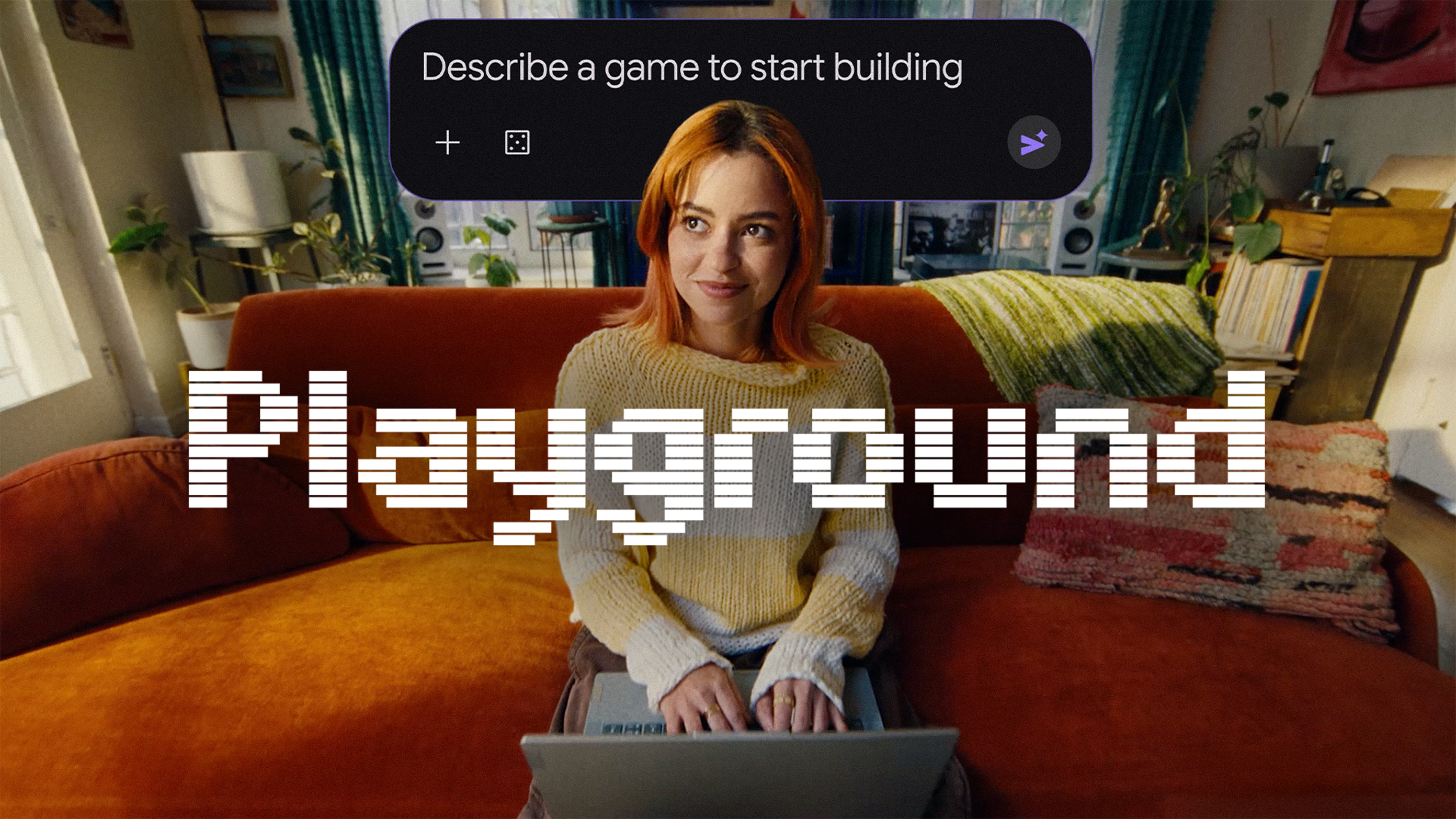
On October 7, 2026, Google introduced Playground, an experimental platform for creating and sharing playable games through text instructions. Google and Unity also announced Unity Spark, a planned browser-based creation experience intended to combine accessible prompts with Unity's game runtime and higher-fidelity game systems later in 2026. Playground is the product available now in its initial US rollout; Spark should not be described as already generally available.
The potential business change is not simply 'AI writes game code.' It is that more players might become creators, and platforms could compete on discovery, distribution, reusable assets, and tools that help creators finish their ideas. These are editorial implications, not forecasts verified by a market study.
Original announcements: Google Playground
Partnership details: Google–Unity announcement
2. The player could become a co-creator inside the game
Roblox's February 2026 Cube Foundation Model announcement described a beta called 4D generation. It goes beyond producing a static 3D model: a player in a supported experience can describe a car, then have an object with separately constructed parts and scripted movement. In the Roblox game Wish Master, its developer reported more than 160,000 objects generated with 4D tools during early access.

The Wish Master developer also reported average playtime 64% higher among people engaging with 4D generation. This is a developer-reported observation from a particular experience—not proof of causation or evidence that playtime across Roblox rose by the same amount. It nonetheless illustrates an important possibility: AI could affect what players can create while playing, rather than only how studios produce content.
Original feature and reported figures: Roblox's 4D generation post
3. World models ask whether interactive spaces can be generated as you explore
Google DeepMind's Genie 3, announced in August 2025, demonstrated text-prompted environments that can be navigated at roughly 24 frames per second and 720p, with coherent interaction lasting several minutes. This differs from authoring a conventional game in an engine: the model predicts what the environment looks like next as the user acts. Google's work also aims to help train AI agents in simulated worlds, not exclusively to produce entertainment.

A short interactive research demonstration is still far from a complete commercial game. DeepMind itself lists restricted actions, difficult multi-agent interaction and short interaction duration among Genie 3's limitations. It would therefore be misleading to claim that AI can already generate limitless, stable, multiplayer games on demand.
Research and technical limitations: Google DeepMind Genie 3
4. The adoption and industry sentiment numbers complicate the story
The GDC 2026 State of the Game Industry survey, based on more than 2,300 industry professionals, reported that 36% of respondents used generative AI at work. Yet 52% judged its effect on the industry negatively and only 7% positively. These are survey responses from the industry, not an estimate of AI game-market growth. They underline the questions around jobs, ownership, creative quality and whether easily made games will actually be worth playing.
Unity CEO Matt Bromberg has also stressed that AI should help people make distinctive games rather than mechanically duplicate existing ones. Better creation tools do not by themselves guarantee strong game design, commercial demand, or a self-sustaining market.
Industry survey: GDC 2026
Unity leadership's creative position: Why we built Unity Spark
So is gaming the next AI S-curve? A plausible thesis, not a confirmed fact
Three developments now connect: lower barriers for game creators, more interactive content generated by players, and research systems that simulate explorable worlds. Together they suggest games may be one arena where AI shifts from an assistant producing files to technology shaping live, interactive experiences. But an S-curve would require evidence of sustained adoption and economic value over time. The current announcements and demonstrations are signals, not that proof.
What matters next is whether these tools produce more completed games people return to, reliable systems that remain fun after the first prompt, and business models that reward creators. Until those outcomes are observable, the responsible conclusion is that games are a promising next frontier for AI—not a proven next growth engine.
Previously reported by GameSlash: Google Playground and Unity Spark launch details
Related evidence on quality: Roblox's evaluation of AI-built games
Benchmark of current limits: OpenGameEval tests game-development agents