 GAMESLASH
chirp adds WAV loop markers and mono exports for AI-generated game audio in Godot
By GameSlash
A November 6 update to the code-driven audio toolkit chirp embeds WAV loop points and adds mono output, with practical cave and torch sound previews for Godot projects.
On November 6, 2026 at 18:06 UTC (November 7 in Thailand), the open-source chirp game-audio tool gained embedded loop information in WAV files and a mono output option aimed at Godot workflows. The change is documented in the author's commit. It means an AI coding agent can edit a procedural sound recipe, rebuild it and export audio better suited for seamless ambience or positional sound without manually adding loop metadata.
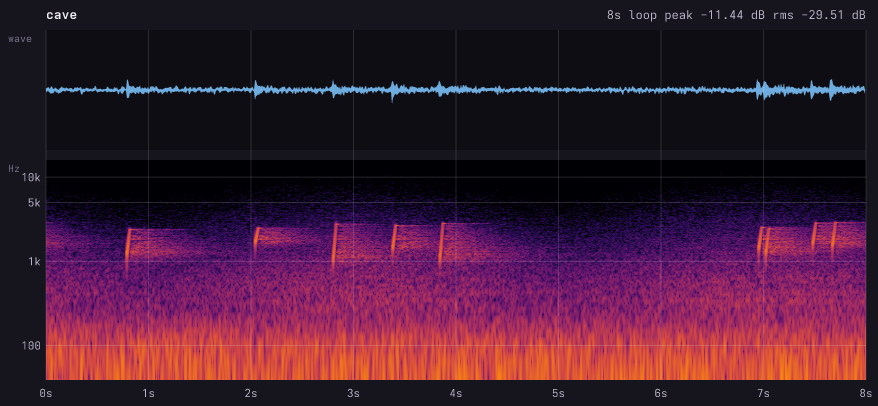
What changed for audio imported to Godot
When chirp creates a looping WAV, it now writes a RIFF smpl chunk describing one forward loop spanning the audio. The developer says Godot can recognize this with its 'Detect from WAV' import setting. The new --mono switch writes a single-channel file, useful when a game engine spatializes a positional effect such as a nearby torch or a machine.
These additions address two recurring practical tasks: making a loop repeat reliably and keeping positional SFX in an appropriate channel format. They do not replace listening tests, volume balancing, or verifying the engine's import options.
AI creates and checks sound through code
chirp uses .cx.js recipes for tones, noise, envelopes and patterns to synthesize WAV/OGG files. Since AI coding agents cannot listen directly, the build also provides waveforms, spectrograms and numeric diagnostics such as clipping and pitch. With these outputs an agent can propose targeted revisions instead of regenerating every sound from scratch.
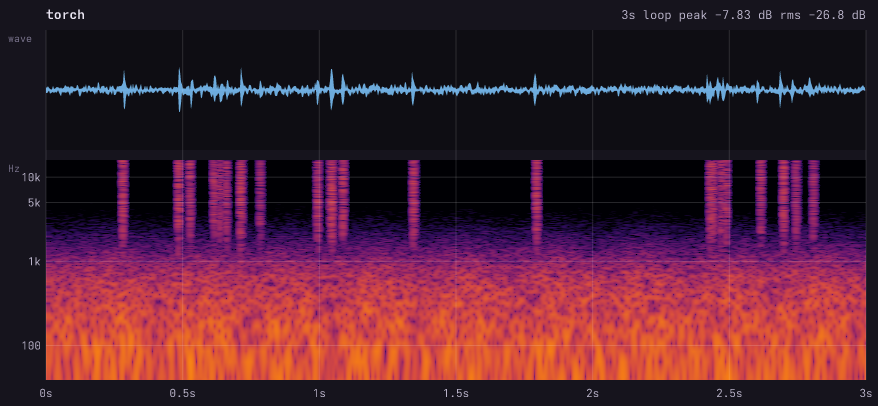
Try the new workflow
The commit adds example sources for cave and torch loops and a music theme, plus the rendered previews and OGG files. A game creator can inspect the examples, edit the source with Claude Code or manually, render a looping WAV, bring it into Godot and verify the loop point in-game. For sounds that move through 3D or 2D space, test mono exports and attenuation. GameSlash has reviewed the source and image examples but has not run an independent listening or Godot import test.
Official references: feature commit · project README · MIT license.