 GAMESLASH
Grave Night: Claude Code finishes an AI-assisted game in 5 days, team details $134 cost
By Ludo.ai
Ludo.ai shared a five-day Grave Night production experiment: 148 assets, 206 passing checks and a $134.47 public-price estimate, including measurable playtest fixes.
On November 6, 2026, Ludo.ai published the results of a five-day experiment turning its unfinished 629-line browser game Grave Night into a playable three-night action game. Claude Code wrote the program while Ludo generated the game art, animation and audio. The team's published public-price estimate was $134.47 for code and assets, excluding human labor and some production work. The finished game is free to try on itch.io.
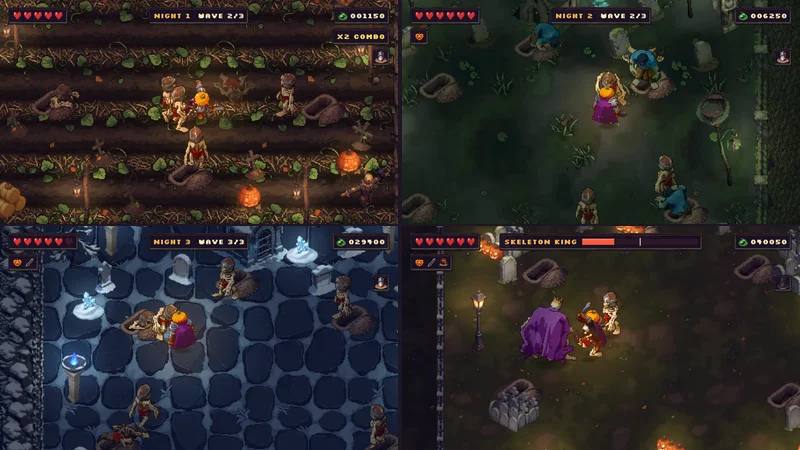
What changed in five days?
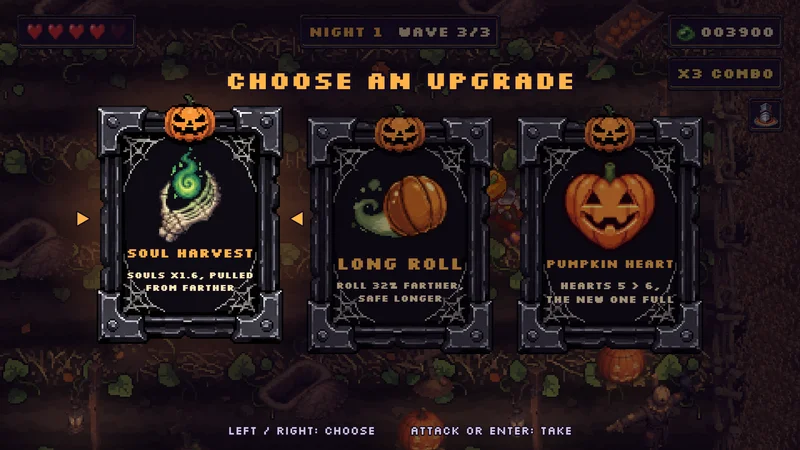
The first prototype spawned endless skeletons and had no ending. The finished version has three nights of three waves each, upgrade cards between nights, a two-phase Skeleton King fight, title and ending screens, and a playable web build. The code grew from 629 to 2,236 lines. The creators reported 206 passing checks and a 7/12 bot win rate on the tuned third night; these are their internal measurements, not an independent benchmark.
The team's workflow separated roles: Claude Code produced and edited the gameplay code, the Ludo CLI generated assets, a second Claude session coordinated tasks and testing, and Miguel from the team accepted or rejected decisions after playing or watching clips. The key was not merely asking an AI for a finished game; it was recording problems, setting measurable goals and retesting.
The clearest technical lesson: measure before editing
A human playtest found attack sounds arriving too early. Frame-by-frame inspection put the mismatch at six to seven frames, or roughly 100–117 milliseconds. Claude Code moved the sound trigger to the blade contact point, smoothed audio starts and ends and added limiting; the team subsequently measured the mismatch below one frame. On a simulated phone connection, the original build took 69.9 seconds before anything was playable. Claude Code then split loading by night, showing the title before loading assets for the first night; the final build displayed its title screen in 2.25 seconds. These figures measure different endpoints, so they do not establish an equivalent reduction in time to playable gameplay.
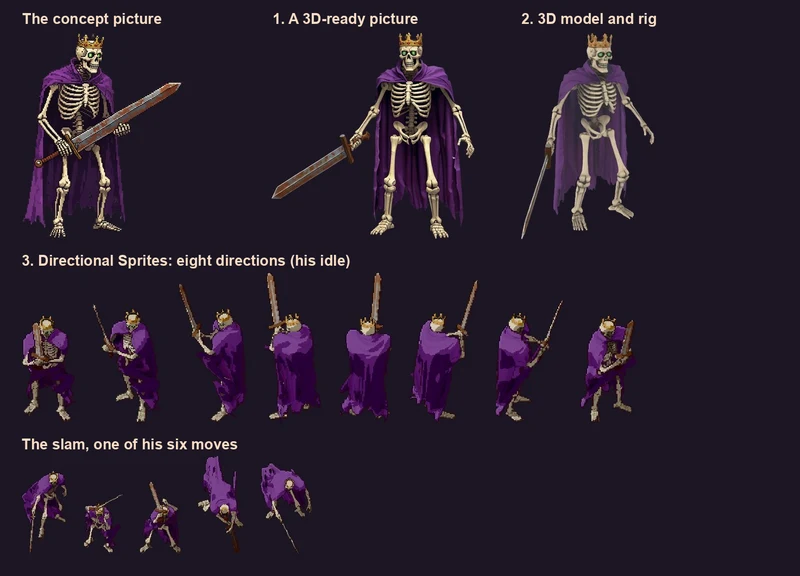
One boss, 48 sprite sheets; what the quoted cost covers
For the Skeleton King, the team generated a reference picture, 3D model and rig, then six moves in eight directions, yielding 48 sprite sheets in one batch. It also generated music, effects and voice lines. Across the whole game, Ludo attributes 78 pictures, 27 animations, 34 sounds, six music tracks and three voice lines, or 148 assets in total.
The cost estimate breaks down as $110.59 for Claude Code using API-equivalent token rates across 19 recorded sessions and 22 hours, plus $23.88 for 477.5 Ludo credits. Ludo says its own subscription and development arrangement did not incur this exact cash bill. The calculation excludes team members' time, the initial prototype coding and the separate production session. It should not be presented as the total budget required to make a commercial game.
Try the game and reuse the process
The public experiment write-up explains the command-line asset workflow and failures. You can play Grave Night free in your browser using a keyboard (WASD or arrows, J/Space to slash, K to smash, L/Shift to roll). Its creators caution that although touch controls exist, they had not tested the game on a real phone at publication. The practical takeaway is a feedback loop: prototype, human playtest, turn observations into measurable requirements, let agents implement changes, verify with scripted runs, then approve by playing again. This article reports the creators' experiment, not a hands-on GameSlash playtest.