 GAMESLASH
Game Assets Maker updates Seedance clip continuation using returned final frames
By GameSlash
A November 8 source change preserves Seedance's returned last frame for the next animation segment, with a local fallback and clear release limitations.
A November 8, 2026 source change to Game Assets Maker, an AI-assisted tool for turning video into game animation frames, improves how creators continue Seedance video clips. Instead of always extracting the last video frame locally for the next segment, its platform-backed generation now requests the provider's returned final frame. If that frame is missing or unavailable, the older local OpenCV extraction remains a fallback. This is a documented source-code change merged to main on November 9, not a newly announced stable installer release.
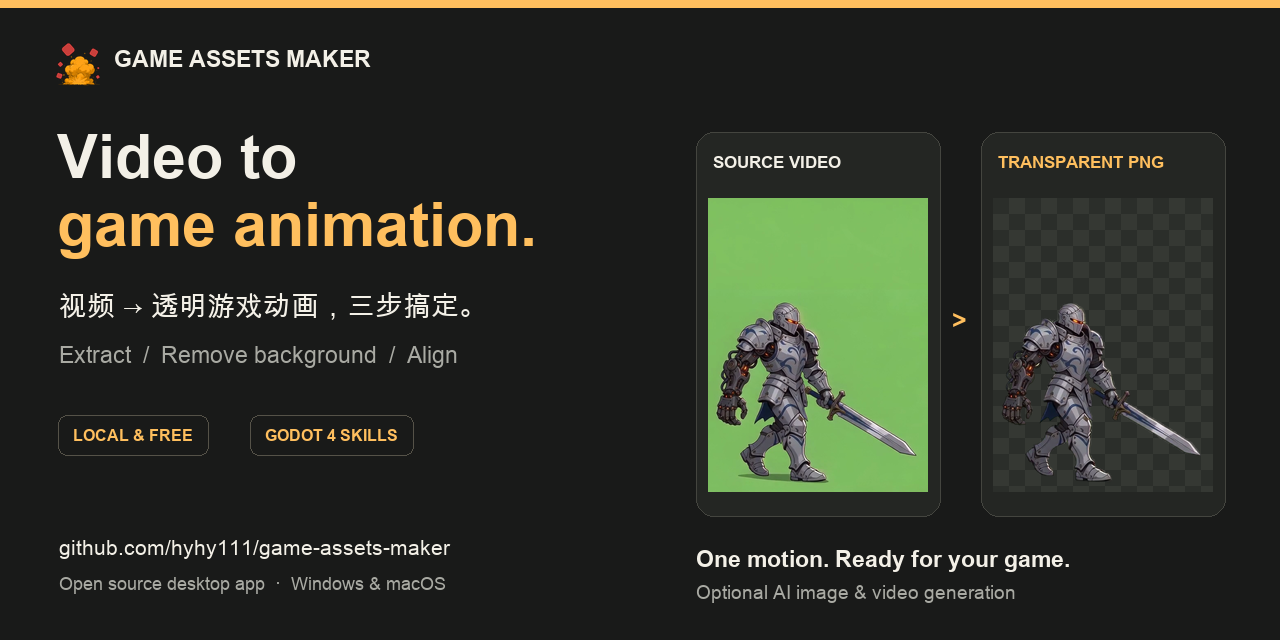
Why a returned last frame matters for game animation
Creators often generate a longer movement by chaining short video segments. The first frame of the next clip should line up with the end of the previous one; otherwise an animated character or camera may visibly jump. The November 8 commit explicitly sets `return_last_frame` for the platform request, maps the returned `lastFrameUrl` into its task data, and prefers that artifact for continuation. It keeps local video-frame extraction as a fallback if the upstream image is missing, expired or not downloaded.
This does not guarantee perfectly seamless motion: the next clip can still change pose, framing or costume. It does, however, make the handoff of the source frame more explicit and testable. The developer added unit tests for the new request, URL mapping and fallback behavior.
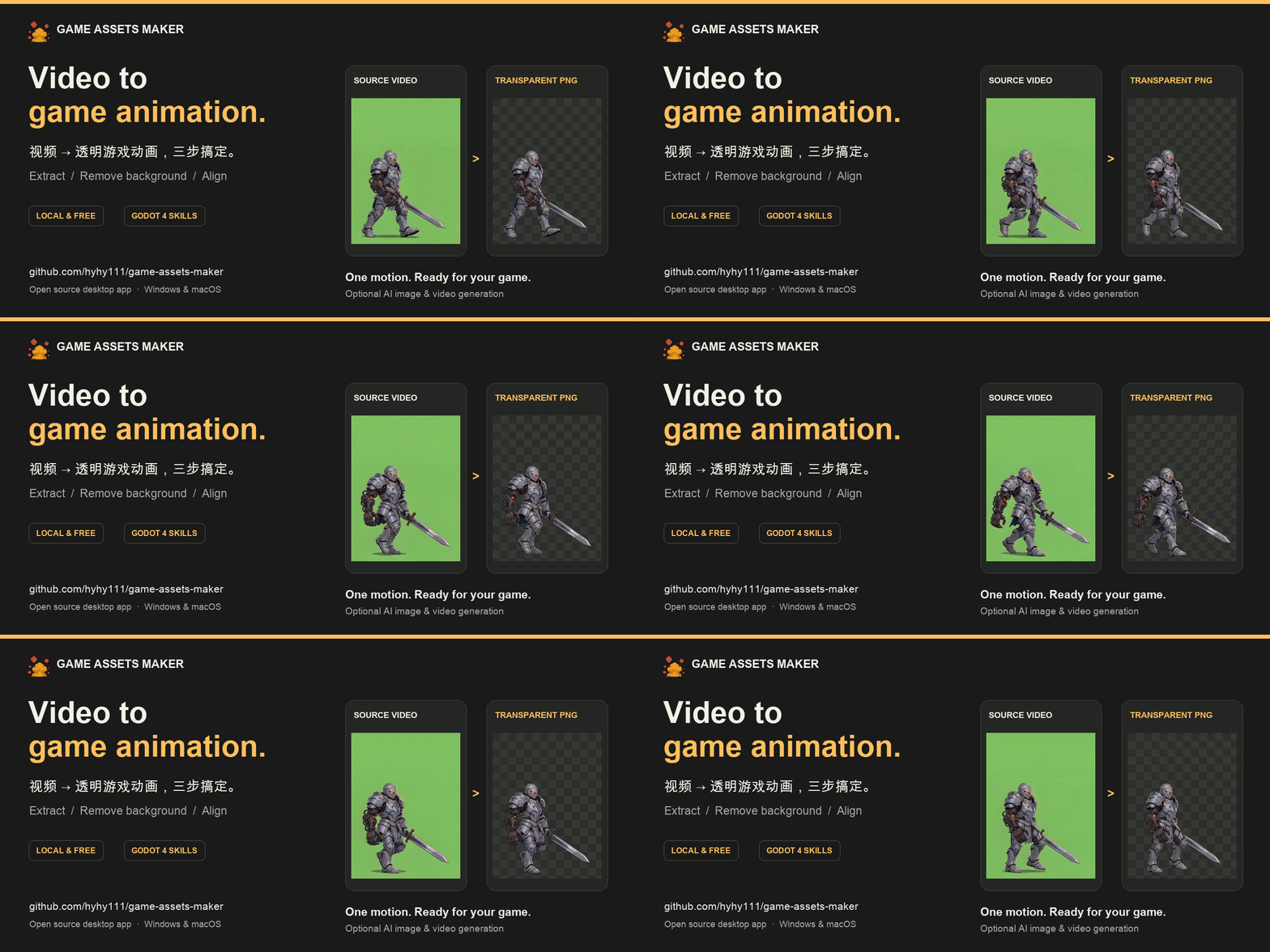
How to turn these videos into usable game sprites
The project's documented workflow is to import or generate a short movement video, extract frames, remove the background, clean up holes and edges, align frames to a consistent anchor, and export transparent PNG sequences for a game engine. For extended AI-generated motion, the upstream final frame can now seed the next generation when available. Afterwards, inspect the clip boundary, foot anchoring, alpha edges and rhythm before packing frames into a sprite sheet or importing to Godot. The repository also offers optional AI generation and Godot 4 agent skills.
Availability and version caveat
The latest public installer release checked is v1.0.3 dated November 2, 2026 for Windows x64 and Apple Silicon macOS. The November 8 continuity work appears in source commits merged on November 9; do not assume it is already in v1.0.3 downloads. Local frame extraction, background cleanup and alignment can be used free of generation credits; optional provider-based AI generation has separate costs and service requirements.
Original sources: November 8 implementation commit · Published v1.0.3 release notes · README and source.