 GAMESLASH
PICG keeps AI-assisted buildings and terrain editable as procedural graphs
By GameSlash
Generated a 3D model but need to change its shape? PICG offers editable building and terrain workflows, AI-assisted graph editing and Unity integration—with important setup limits.
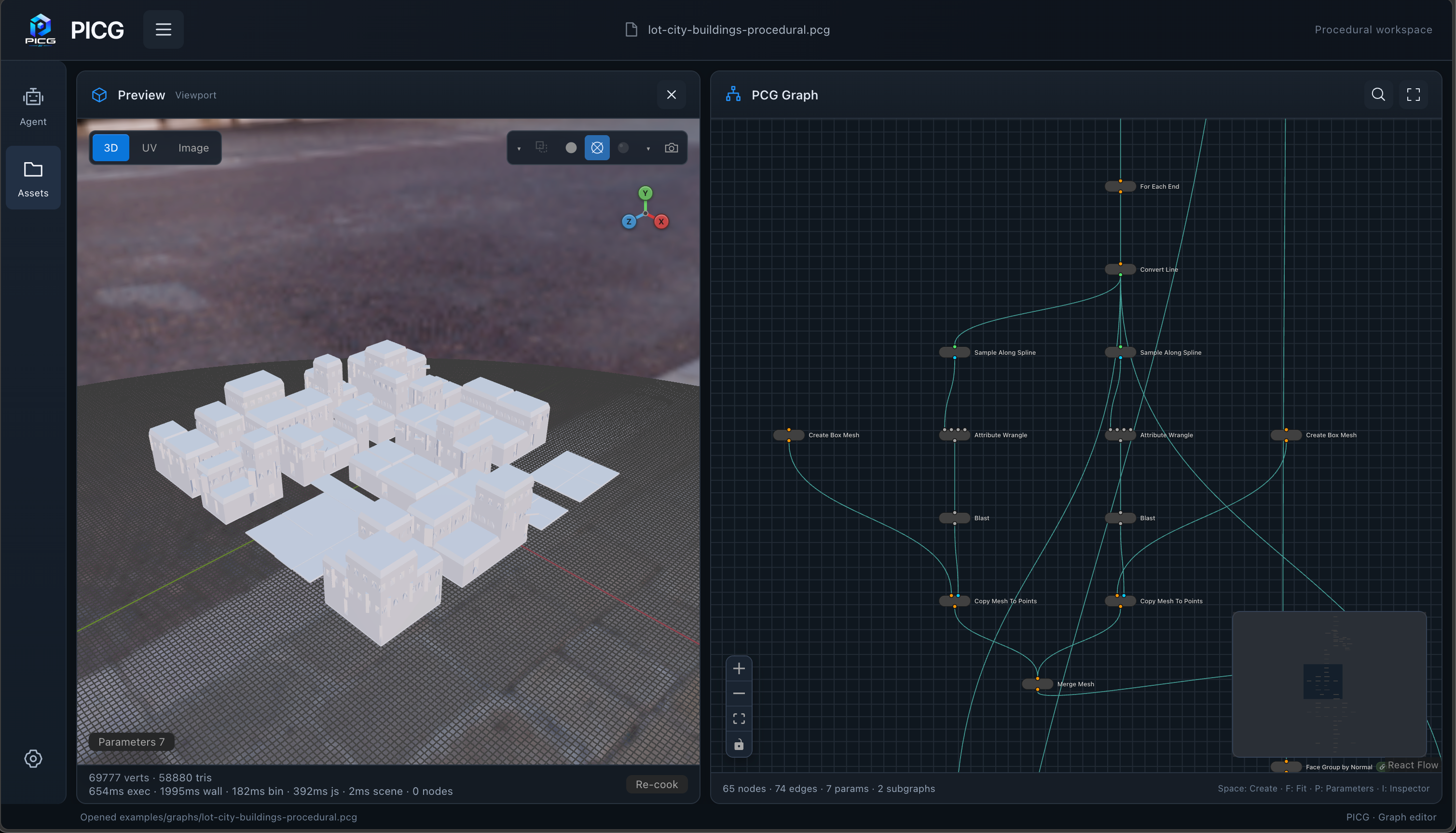
You ask AI to make a 3D town, then decide the streets should be wider or the buildings shorter. If the result is only a finished 3D mesh, changing the design can mean rebuilding large parts of it. PICG (also hosted as PCG-AI) explores a different approach: keep the recipe for making the asset, so you can change the parameters and regenerate it.
What makes the result editable?
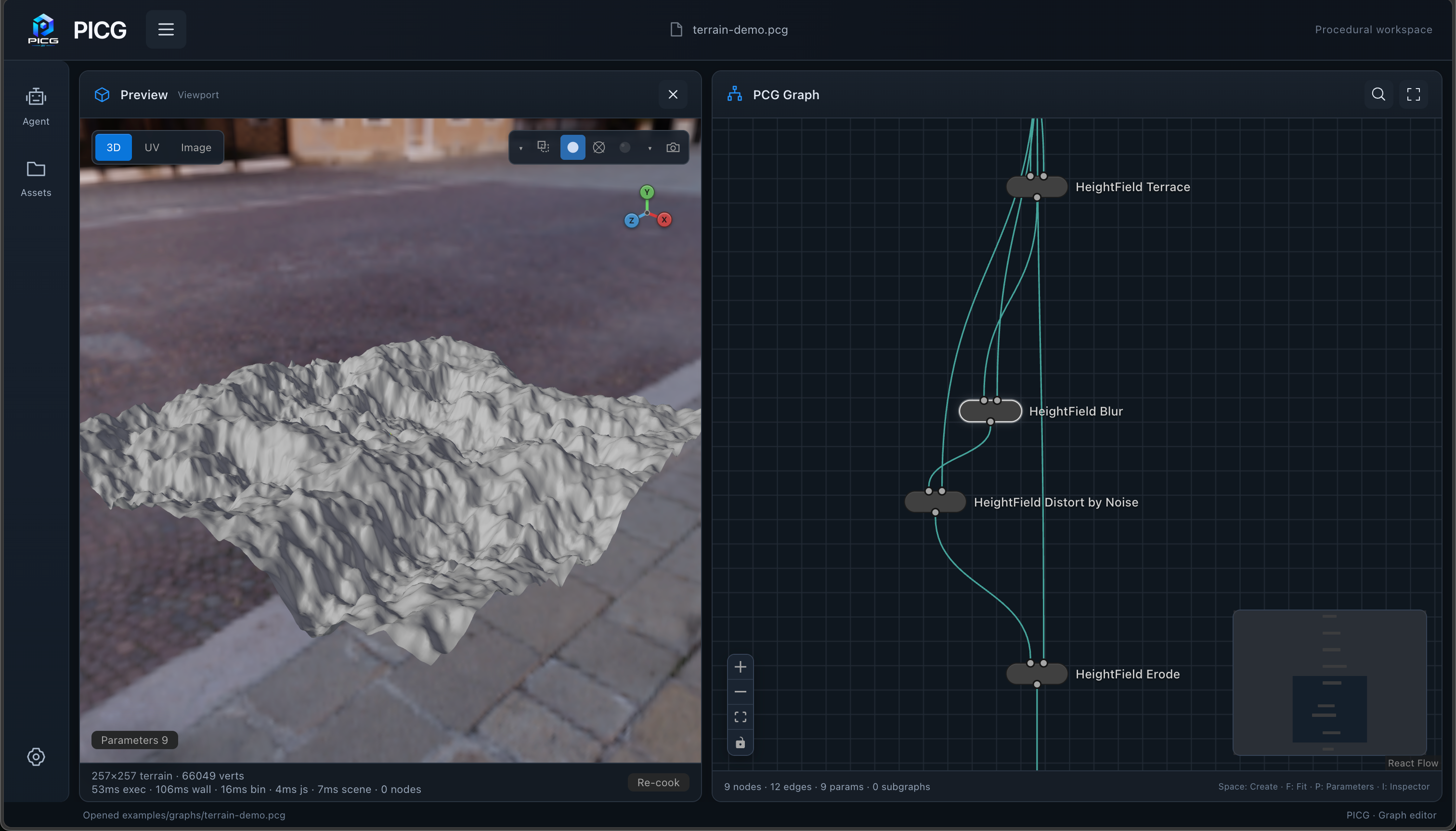
Instead of relying solely on an exported file, PICG records a connected set of steps, called a graph. One step could describe the lot shape, another the building mass, another the roof. A person can adjust those steps; an external AI coding assistant can also edit them through the project's MCP connection. The live web editor shows the graph beside its 3D preview. See the original showcase and docs.
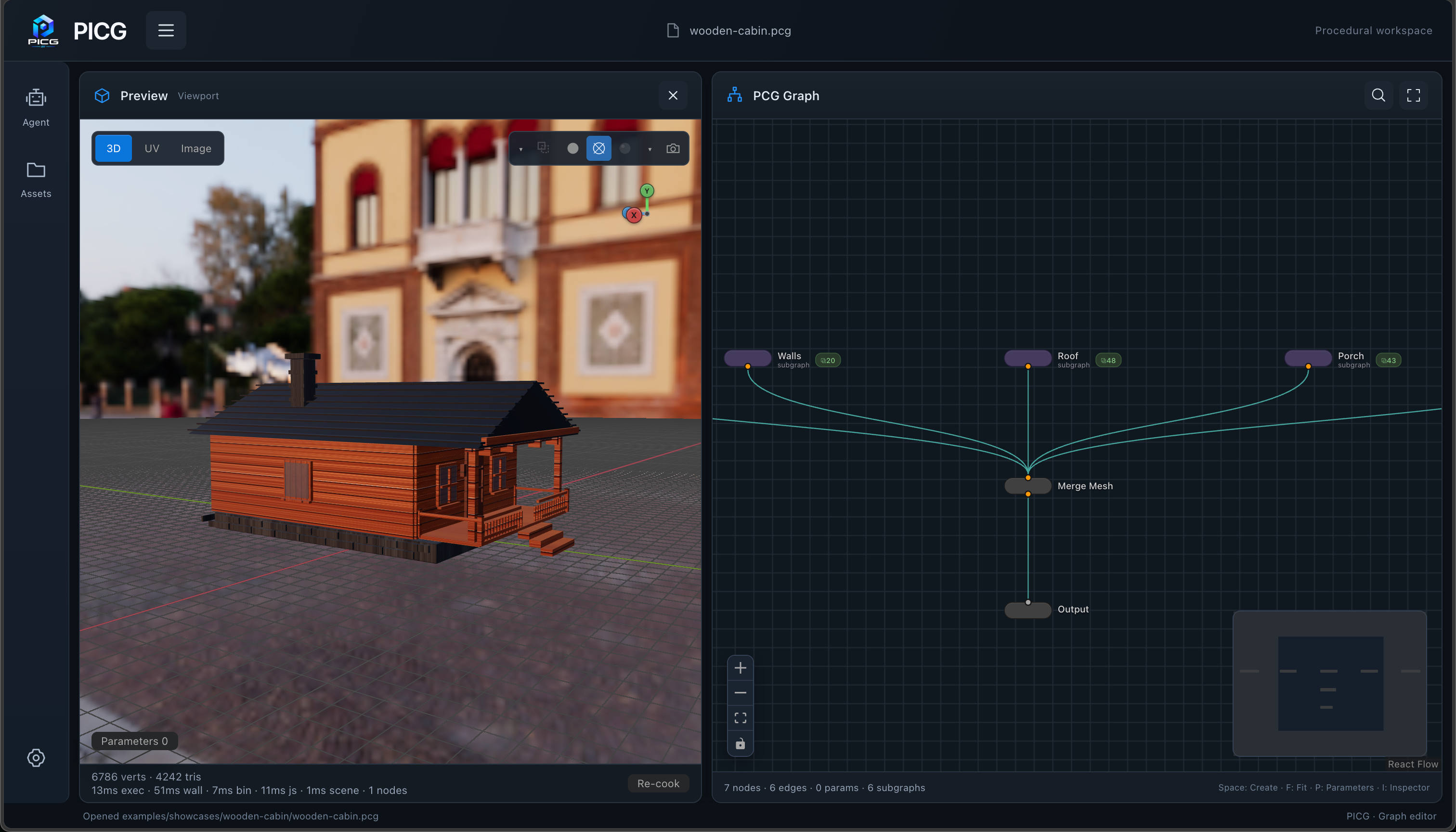
The cabin example is particularly useful for beginners: when the roof looks wrong, the idea is to edit the roof part rather than ask for an unrelated new cabin image. PICG can export models in formats such as GLB, while the Unity integration offers more engine-specific workflows.
What can you do now, and what is still planned?
The project documents a working Web editor, 3D preview and Unity integration. It also describes optional Meshy/Tripo-assisted generation, with cloud calls made explicitly rather than every preview silently spending credits. Unreal Engine, Godot, Blender and a standalone Three.js runtime adapter are listed as future integrations—not features to assume are ready today.
Who benefits, and what should you check first?
Setup requires Node.js, CMake and a C++ compiler. The project is under active development, so schemas and APIs may change. The current Unity Player runtime also requires pcg-server on the same machine. Code is Apache-2.0 licensed; check external Meshy/Tripo costs and output terms separately before using generated assets commercially.
Start with the official repository, inspect its city and cabin examples, and try changing one parameter to check how the rebuilt asset responds.