 GAMESLASH
Hexmap turns AI-assisted terrain art into repeatable hex worlds
By GameSlash
Hexmap is an MIT-licensed reference project for strategy-game hex maps. It combines AI-assisted terrain tile artwork with deterministic code so maps can be regenerated and tile edges checked.
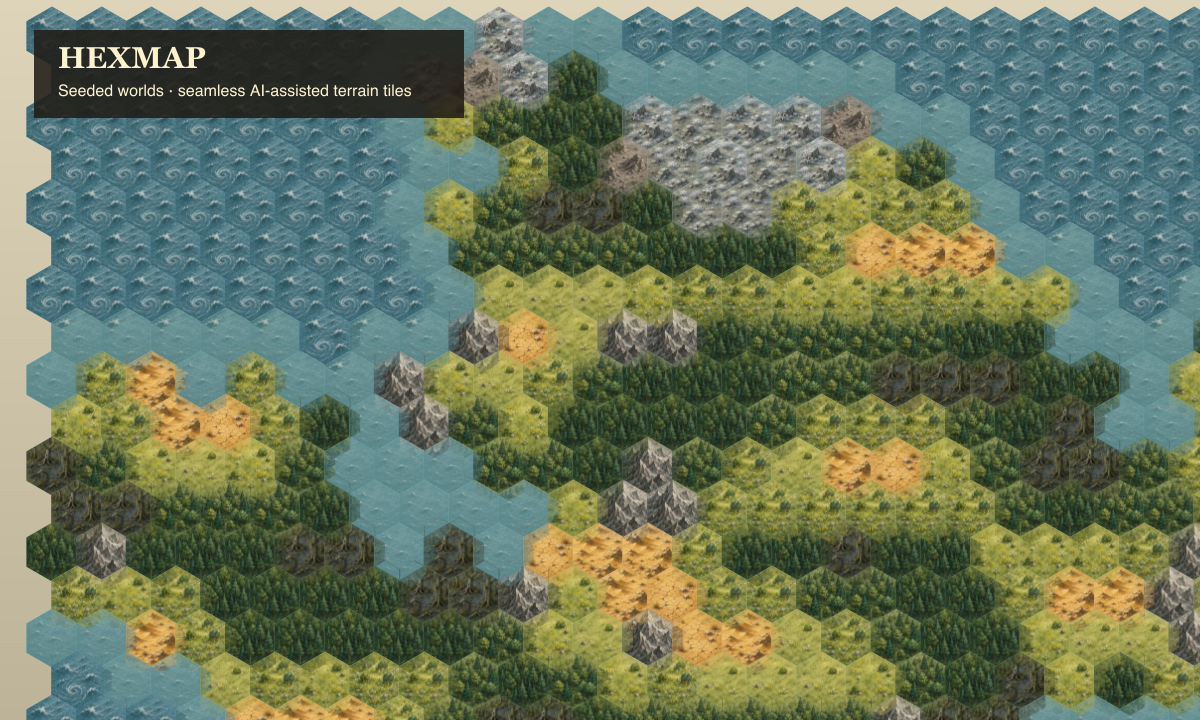
An AI image generator can paint a beautiful world map, but the small pieces may not fit: borders have pink halos, shorelines leave gaps, and the same map changes every time. Hexmap is an open-source example of splitting these jobs. Let AI assist with the artwork, while ordinary code handles tile shapes and placement.
The project's code and bundled generated terrain art are released under the MIT license.
How does one AI-painted picture become game terrain?
Hexmap uses a hexagonal grid, like strategy games in which each piece of the board is a six-sided cell. The author provides a 4×4 atlas template: the image model can paint a set of terrain tiles within a constrained layout. A separate slicing script then cuts them out, cleans unwanted backgrounds and edges, and masks each piece into an exact hexagon. The source guide explains the atlas pipeline.
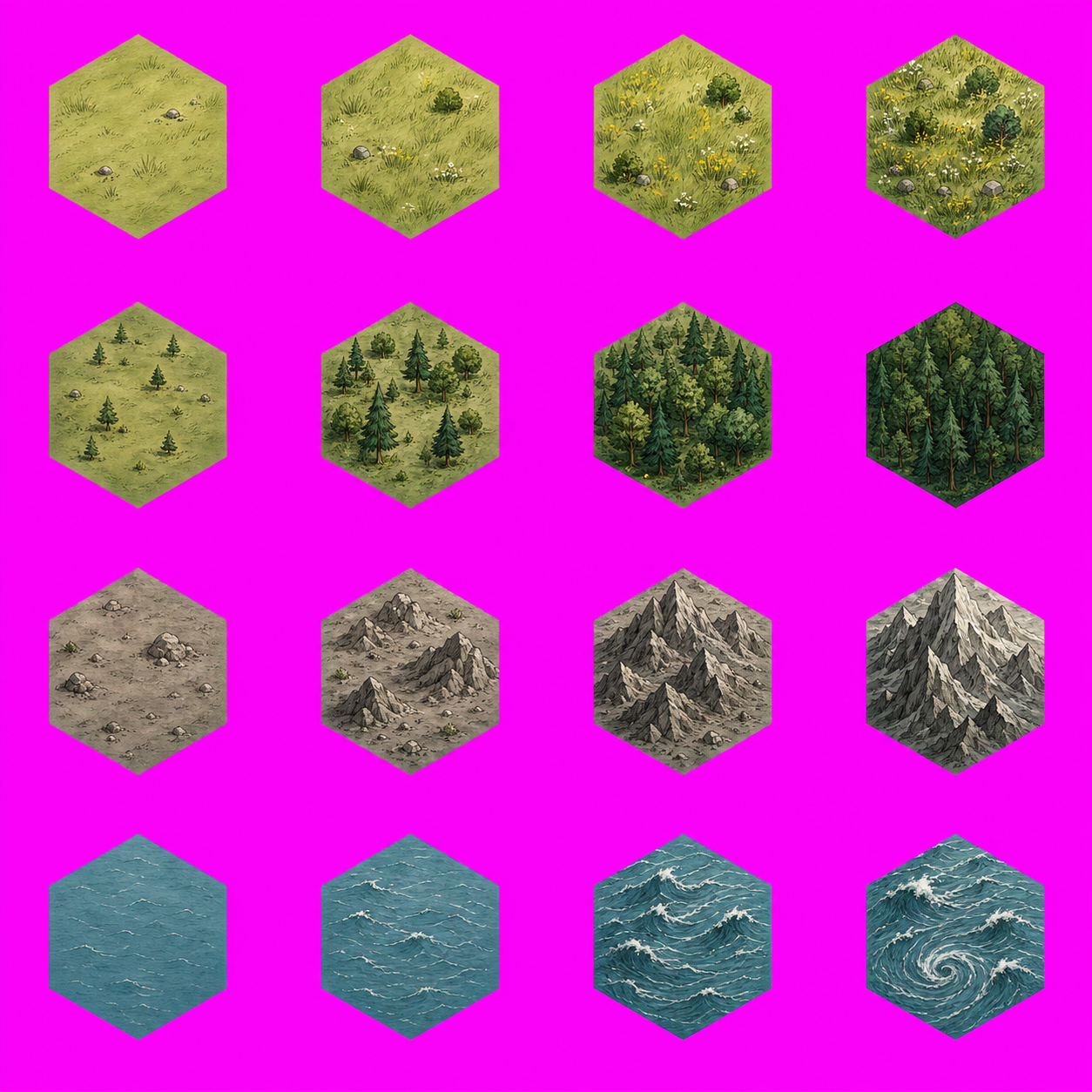
The important distinction is that AI helps supply the colors and textures but does not decide the exact geometry of the map. This makes it easier to avoid visible seams and keep the map usable when the player zooms or pans.
How can an entire world stay consistent?
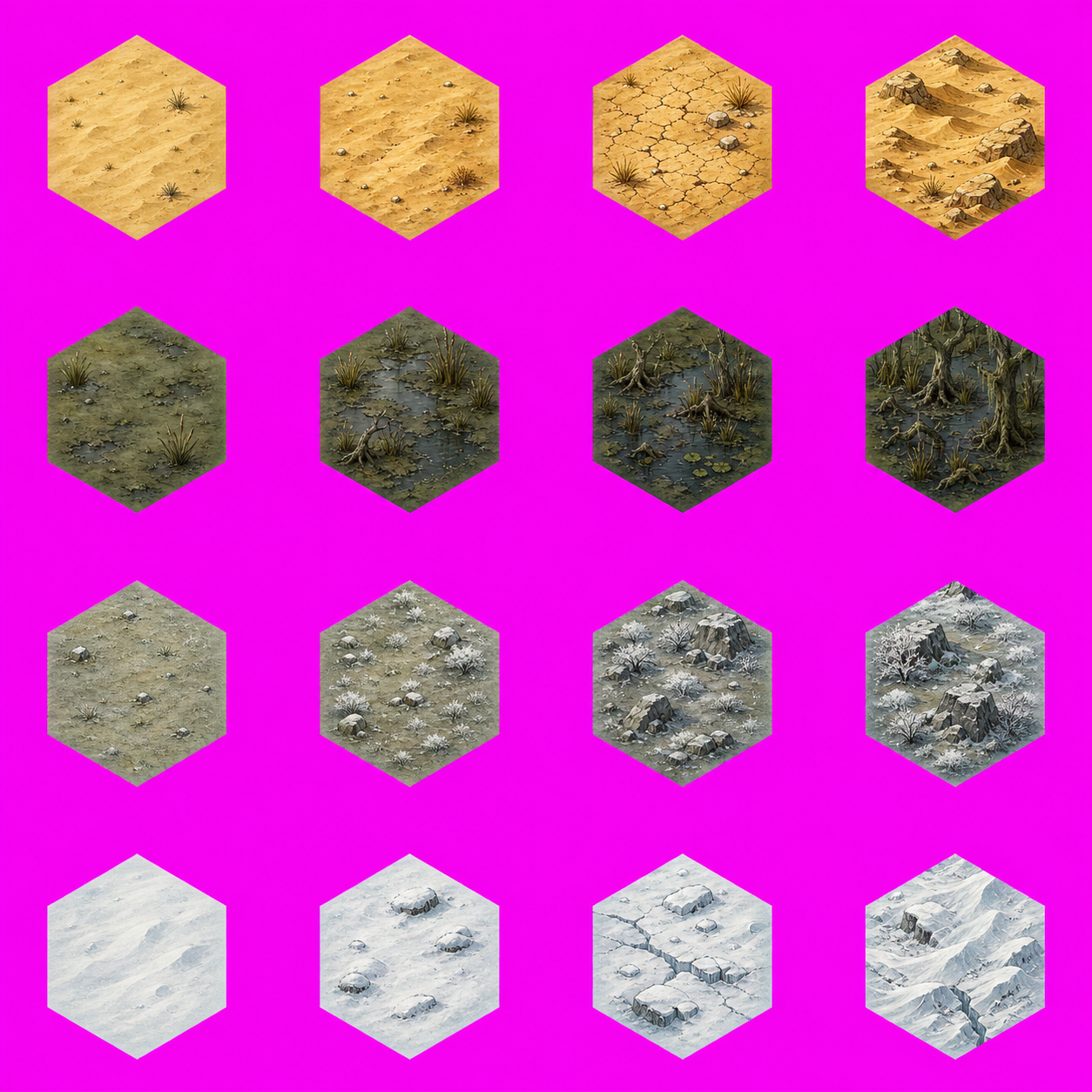
The generator uses a seed—a number that acts like a recipe. Entering the same seed recreates the same layout. The project combines elevation, moisture and temperature to choose biomes, with 32 supplied terrain PNGs across eight terrain families. This is especially helpful if your AI-assisted game needs repeatable levels for saving and debugging.
What are the limits?
Hexmap is a TypeScript/Vite demonstration and reusable Codex skill, not a complete strategy-game editor. Roads, towns, online multiplayer and very large streamed maps are not included as finished features. You can run the demo locally and ask an AI coding assistant to adapt the supplied skill, but you still need to test edge joins, performance and save/load in your own game.
See the project repository and demo instructions. Its practical lesson: use AI for a constrained art job, and let deterministic tools take care of pixel-perfect shapes and repeatable game rules.