 GAMESLASH
CUT! devlog: Claude Code built a horror game in 21 hours, bots found a 186-cut bug
By GameSlash
A new Epic AI MegaJam devlog shows text-first Unreal C++, eight agent worktrees, a reproducible 186-cut bug and the human playtest fixes automation missed.
In a new postgame devlog shared around November 15, developer xmflrtm2 explains how one person and Claude Code built the horror game CUT! for the November 12–15 Epic AI MegaJam. The developer reports roughly 21 hours of work and a final 538 MB packaged build. Unlike a vague claim of 'AI-made game', the log details how game rules, Unreal C++ tools, eight parallel agents, tests, and human playtesting fit together. Read the developer's build log
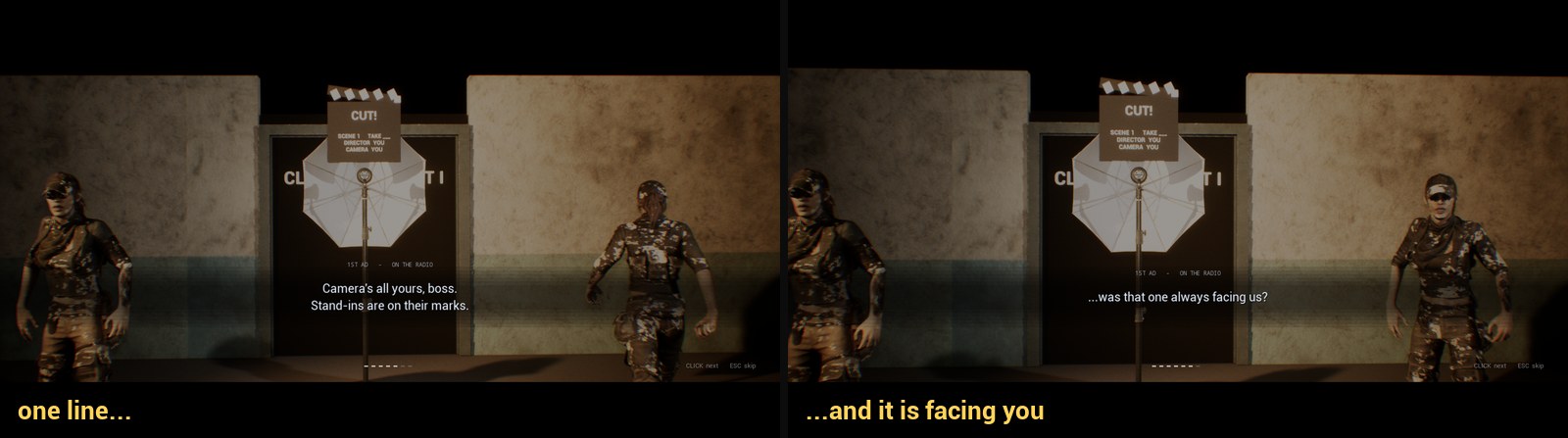
A horror game where the camera cut is the danger
You are shooting a low-budget horror film on a hospital set called Bed Thirteen. Stand-in figures move only when the camera cuts and they are out of view. A figure kept in frame freezes. Cut while looking away and it approaches; let an eight-second reel run out and they move twice. The player must frame 27 required shots across five sets. A final Director's Cut replays footage the player actually captured, so the game mechanic and the jam's Director's Cut theme are the same idea. Play/download page
Text-first Unreal: C++ and a generated level instead of clicking in the Editor
The game uses Unreal Engine 5.7, C++ rather than gameplay Blueprints, and a Python/JSON level pipeline. The creator says a PowerShell wrapper can build, package, simulate inputs and take screenshots while the Editor runs headlessly. About 463 actors—walls, props, shot marks, lights and stand-ins—are defined in data and assembled into five sets; changing the data regenerates the level. The claim that this takes around 12 seconds is from the developer's own machine. Technical breakdown
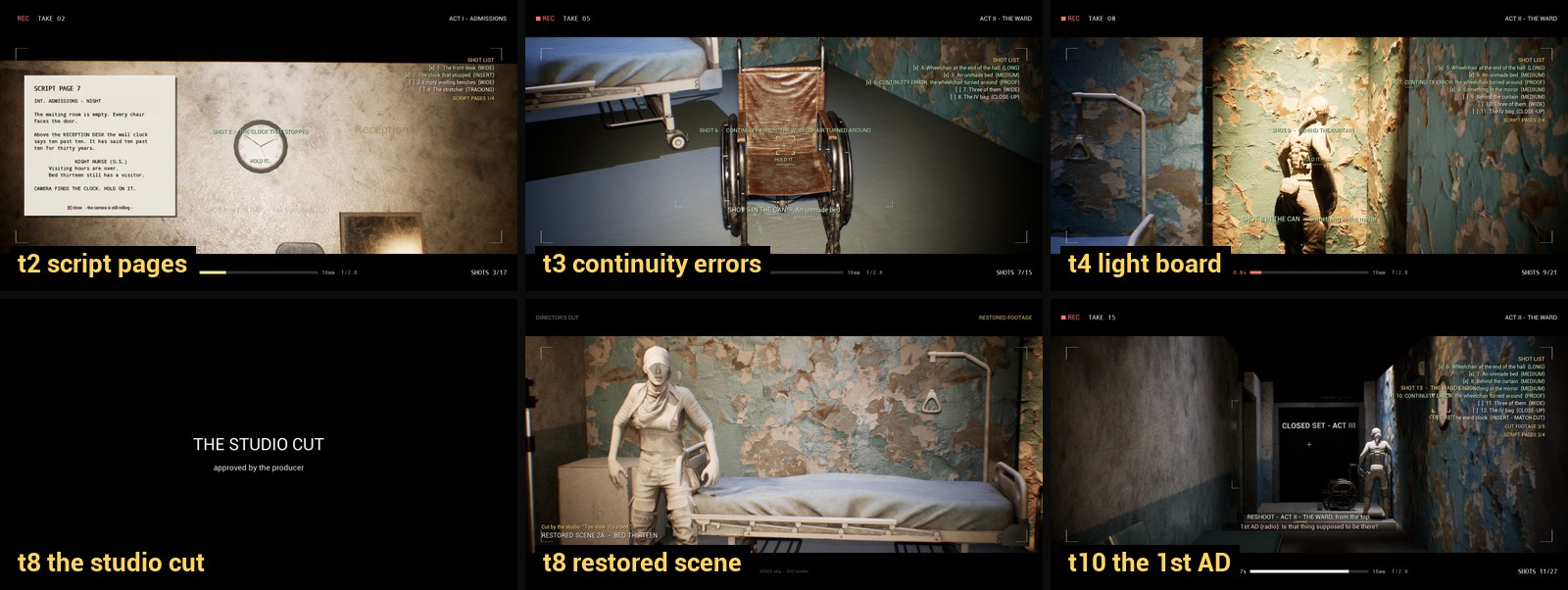
Eight agents, but each owns its own track
After the first human playtest concluded the game was too short, the developer expanded a small core event API and assigned tasks to separate Claude Code worktrees. New C++ files and level modules could be added independently; changes to the core required separate reviewed commits. Tracks added hidden script pages, props that change between takes, a light-board puzzle, opposite-behavior mannequins, the sound system and the two-cut ending. This avoided some merge conflicts but did not eliminate them: a running map file lock and Unreal unity-build collisions still broke integration. The developer reports merging eight tracks in under four hours. See the agent workflow
An automated bot caught a 186-cut soft lock; a human caught what it could not
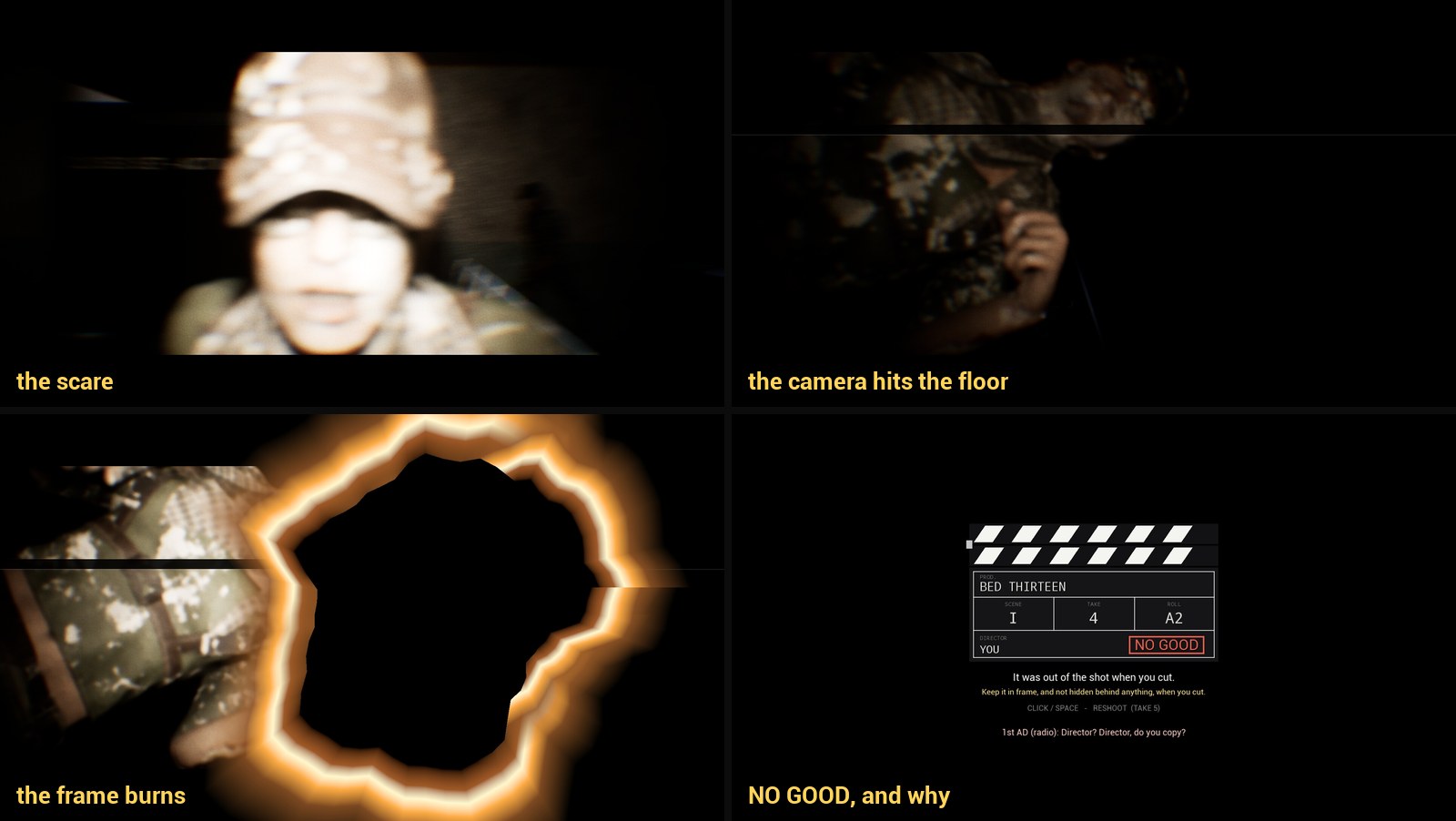
Every development round ended with scripted playthroughs at different difficulty levels. One packaged-build bot became stuck near a film can and pressed CUT 186 times; logs showed the collectible was 0.21 from the target center but its interaction threshold was 0.20. The creator increased the threshold to 0.28. The automated UI tour also caught a menu overlap in a 4:3 viewport. Yet a later human session exposed a flat death sequence, cluttered menu and weak introduction that automated tests had not judged. The finished build's reported bot run captured 27 of 27 shots with grade A; these figures are the creator's reports, not independent GameSlash tests. Debug story
A reproducible sound and trailer workflow
Because the AI agent could not listen directly, the sound subsystem measured loudness in LUFS. The creator compared deterministic recordings to isolate sounds and found that one supposed missing cue was actually delayed by roughly 0.1 seconds in the offline mixer. For the trailer, fixed-step 30 fps capture and a fixed random seed drove image and non-realtime audio rendering together. Licensed Fab asset packs supplied the art and sounds; the developer expressly says the game contains no AI-generated art, voices or audio.
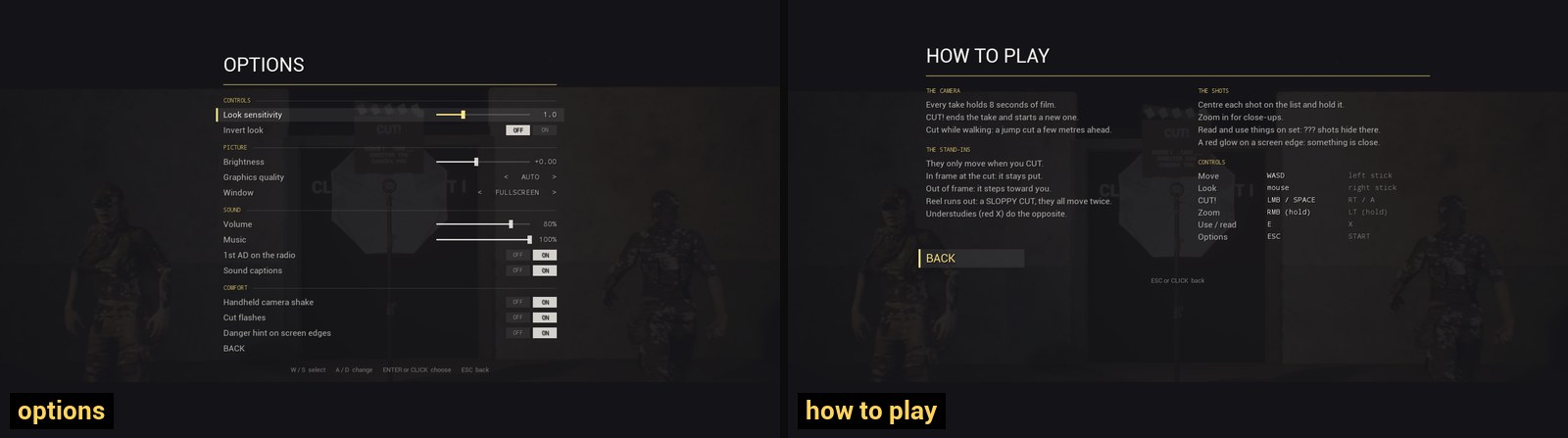
The reusable lesson is not 'tell eight agents to make a game'. It is to define a narrow data-driven interface, give each agent separate file ownership, run automated playable checks after each integration, keep measurements for debugging, and reserve human playtesting for pacing and feel. Related GameSlash reporting: Retake! and its 37 regression checks. Source: CUT! creator's new full build log.