 GAMESLASH
Dimension 9 opens an AI-evolving multiplayer Backrooms world in the browser
By GameSlash
Released November 6, Dimension 9 is a playable multiplayer Backrooms exploration game whose developer says Opus 5.5 creates new rooms and entities, with maps, scanners and discovery records.
On November 6, 2026, developer apek (@apekshik) shared Dimension 9, a browser-playable multiplayer Backrooms exploration game. Its central twist is a world the creator says Claude Opus 5.5 keeps expanding with new rooms, entities and encounters under an in-game directive. Instead of a generic chatbot NPC, the promised AI system changes what players can discover in the environment; the live website also exposes a mapped collection of distinct named sectors and places.
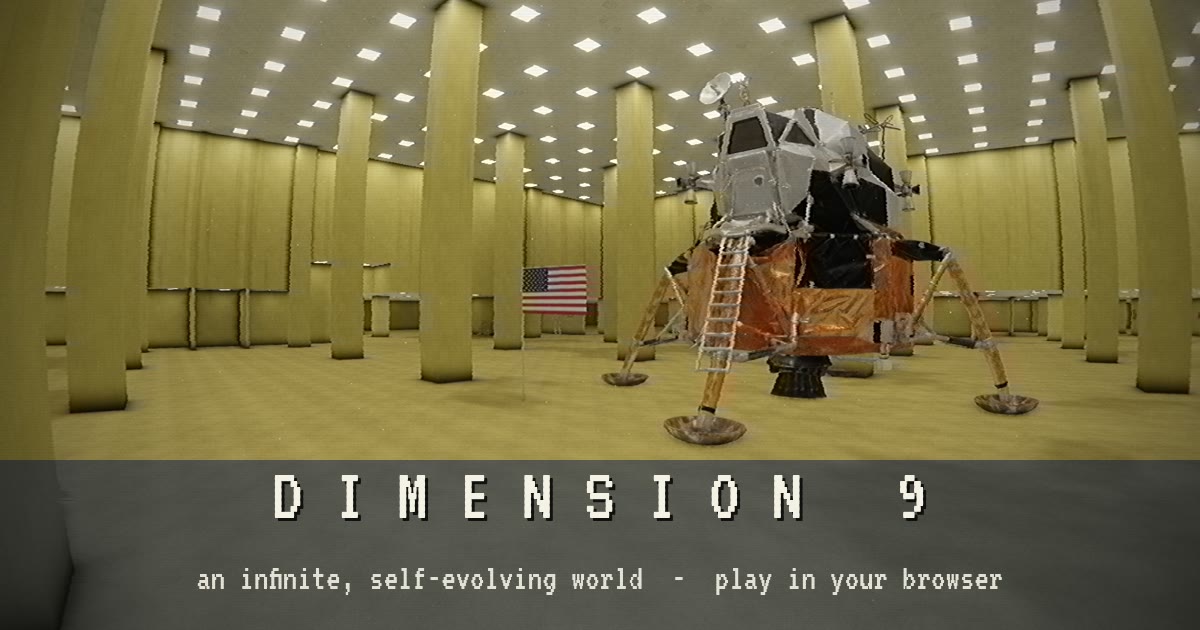
What actually makes this different to explore?
The game is playable on desktop or phone directly from the developer's site. First-person movement uses WASD and mouse on desktop, with sprint and crouch, a scanner, an EMP scan, map, flashlight and logbook. The developer describes shared exploration with proximity voice chat, so nearby players can find and discuss unfamiliar rooms together. We confirmed the playable page and its listed controls, not the reliability of its real-time AI generation.
The public Discoveries page uses file records with sector coordinates. The Atrium is filed as M-50, with rooms such as The Poolhall in N-49 and other named places further from the lander. This gives the game a concrete exploration objective beyond wandering randomly: keep track of addresses, look for new files and compare what others have uncovered. The page also lists hunters and residents as separate categories.

AI development claim versus what is verified
In the creator's November 6 announcement on X, apek says the world began with a set of rooms and an AI 'world DNA' directive for new areas, inhabitants and experiences. The public playable site describes Dimension 9 as an infinite, self-evolving Backrooms built with Opus 5.5. That is a developer claim: GameSlash did not inspect the game's backend or run a long multiplayer test, and the catalog of discovered rooms is not by itself proof that content is generated indefinitely.
For players, the unusual hook is shared exploration, spatial discovery and surprises driven by the claimed AI world system. For game creators, this is a concrete design experiment in using an AI-directed world generator as part of the gameplay loop, while keeping navigation and discovery tools conventional and legible. Try the live browser game and view the official world gallery for examples of its sectors.