 GAMESLASH
DSH Game Studio opens up: AI builds, playtests and exports small browser games from a prompt
By GameSlash
ZSeven-W released DSH Game Studio, a DeepSeek Harness plugin that turns a prompt into an editable 2D or 3D game, tests it in a browser and exports offline HTML.
Developer ZSeven-W has opened DSH Game Studio, a plugin that turns a short instruction into a small playable browser game inside DeepSeek Harness. The public repository was created on November 5, 2026, and the developer shared the open-source workflow on November 6. Rather than delivering only generated code, the agent can preview the game, run an automated playtest, let a creator approve optional AI-made art and export a single offline HTML file. This is an early release, not a general-purpose replacement for Unity or Godot.
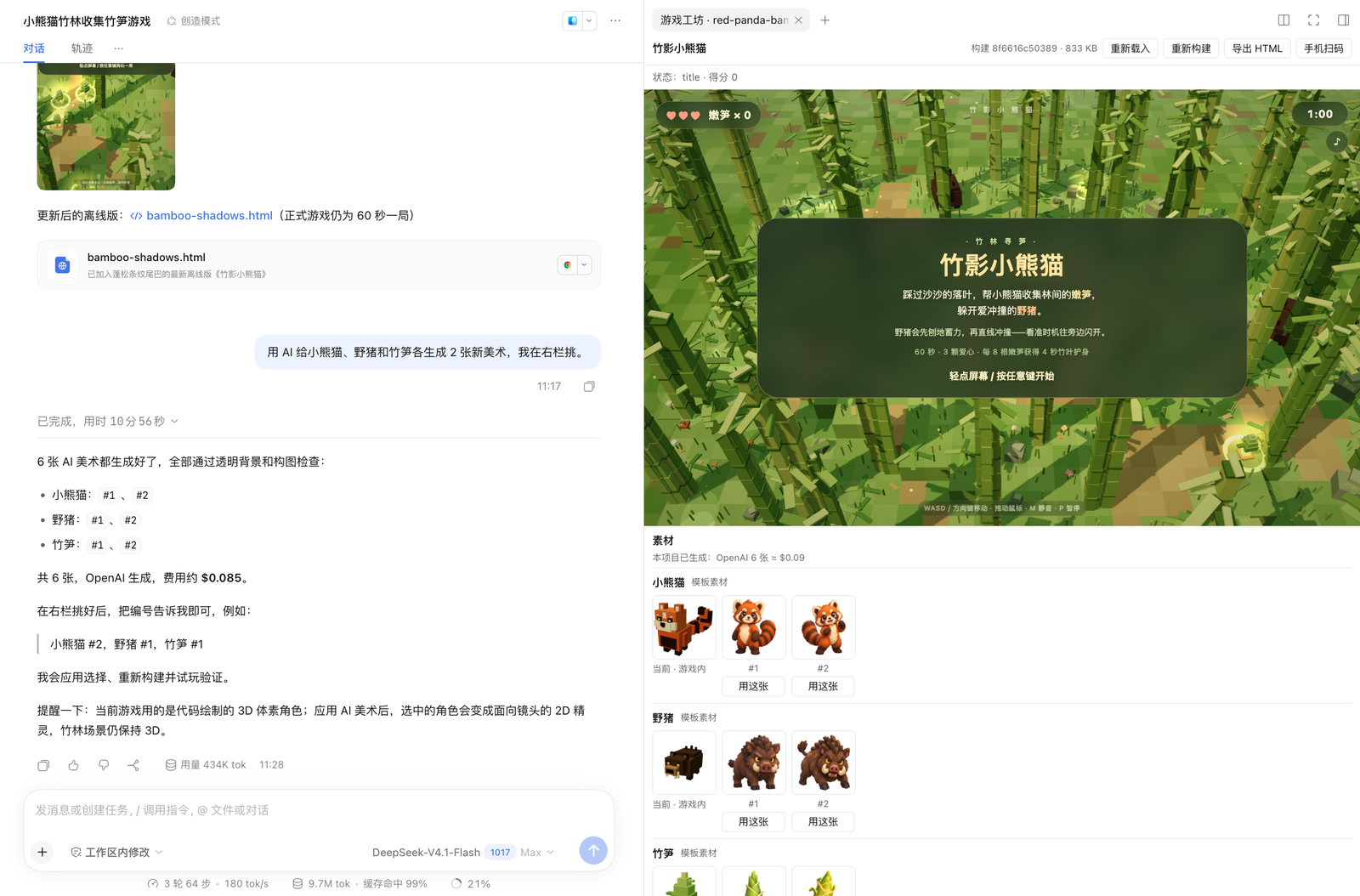
From one prompt to a playable prototype
The plugin provides a 2D top-down template and a 3D voxel template built with three.js. You describe rules, characters and goals; the agent edits the game's code and settings, rebuilds it, and displays the result alongside the conversation. The output remains inspectable as game.json, game.js and an assets folder, so creators can continue iterating instead of relying on a black-box video.
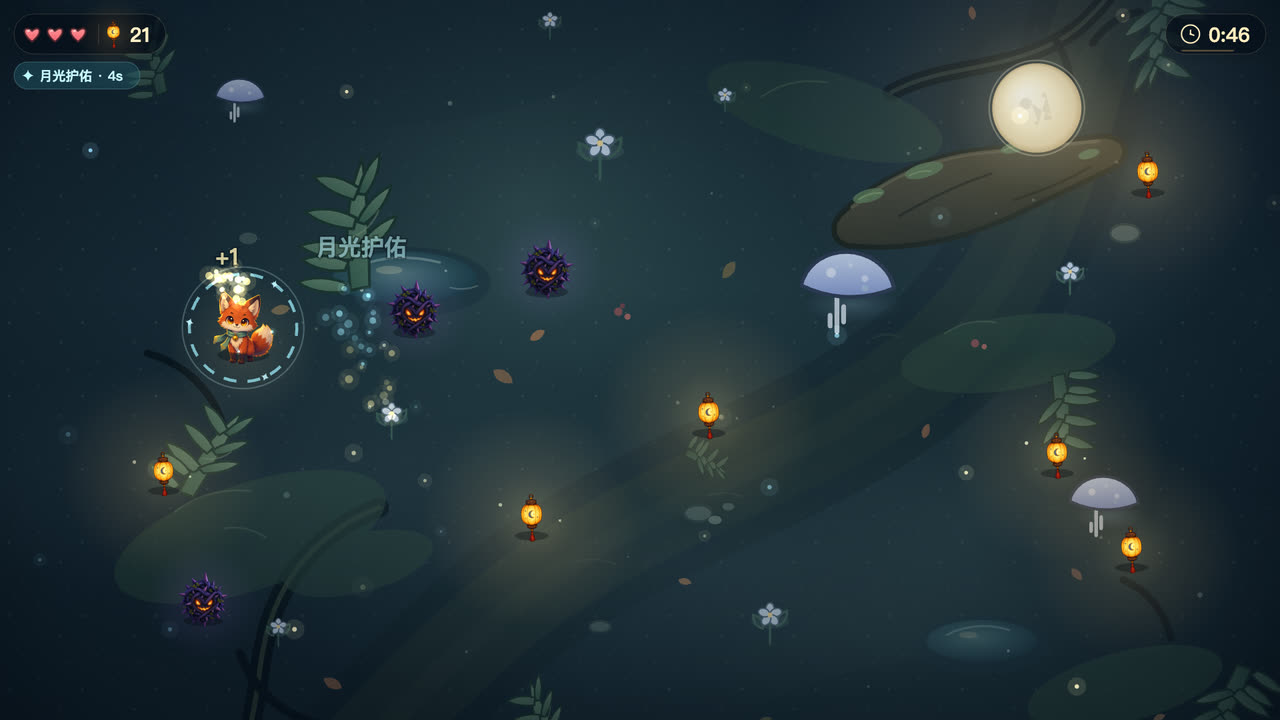
AI can test it before you show it to players
The `game_studio_playtest` tool runs the browser game in headless Chrome or Edge and collects console errors, screenshots, frame rate and gameplay state. For a control scheme beyond arrow keys, developers must supply `window.__autoplay`, so automation does not silently pretend it exercised the game's real mechanics. Project versions can be restored and the finished result exported to one self-contained HTML file.
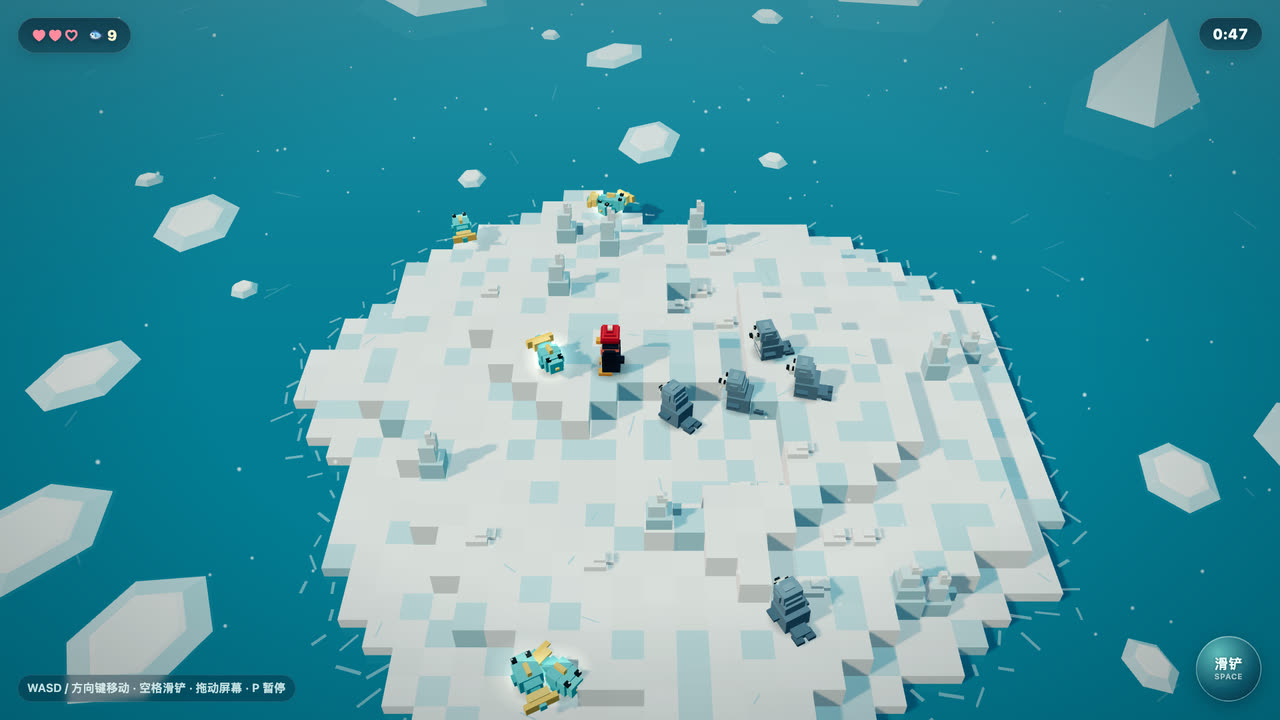
AI art is optional, and may cost money
Characters can initially be code-drawn. Optional replacement artwork uses an OpenAI image API key or a signed-in Codex CLI; the interface shows numbered candidates and requests cost approval before paid generation. To try the project, the official README lists `dsh plugin --profile web add @zseven-w/dsh-game-studio@latest`, then `dsh web`. It requires a supported DeepSeek Harness installation, Node.js and Chrome/Edge for automatic playtesting. It is not a standalone game hosting service.
The author's documented tests used a small sample of ten collect-and-dodge and ten other-genre prompts with DeepSeek-V4.1-Flash. Those results are developer-reported and should not be taken as independent reliability benchmarks. What other builders can reuse is the loop: prompt → editable game → playable preview → automated checks → human selection of assets → portable export.
Sources: source code, examples and install steps; MIT license. All three pictures come from the developer's repository, not generated as illustrations for this article.