 GAMESLASH
Goo World reaches browser pre-alpha after 2,640 AI-simulated card battles and a human playtest
By GameSlash
Sloptrawler's November 21 devlog shows how Claude-assisted card-game rules met human UX feedback, game-balance simulations and browser optimization.
Sloptrawler made the browser-playable pre-alpha of Goo World: Primordial Sea available on November 21, 2026 and published a technical devlog documenting what went wrong when a human finally played it. The Godot roguelike deckbuilder features irradiated jellyfish, a skull-based life system and 300 scripted cards. The useful news is more than a free demo: its creator describes testing AI-written rules, making triggered effects understandable and fixing browser performance. Read the November 21 devlog.
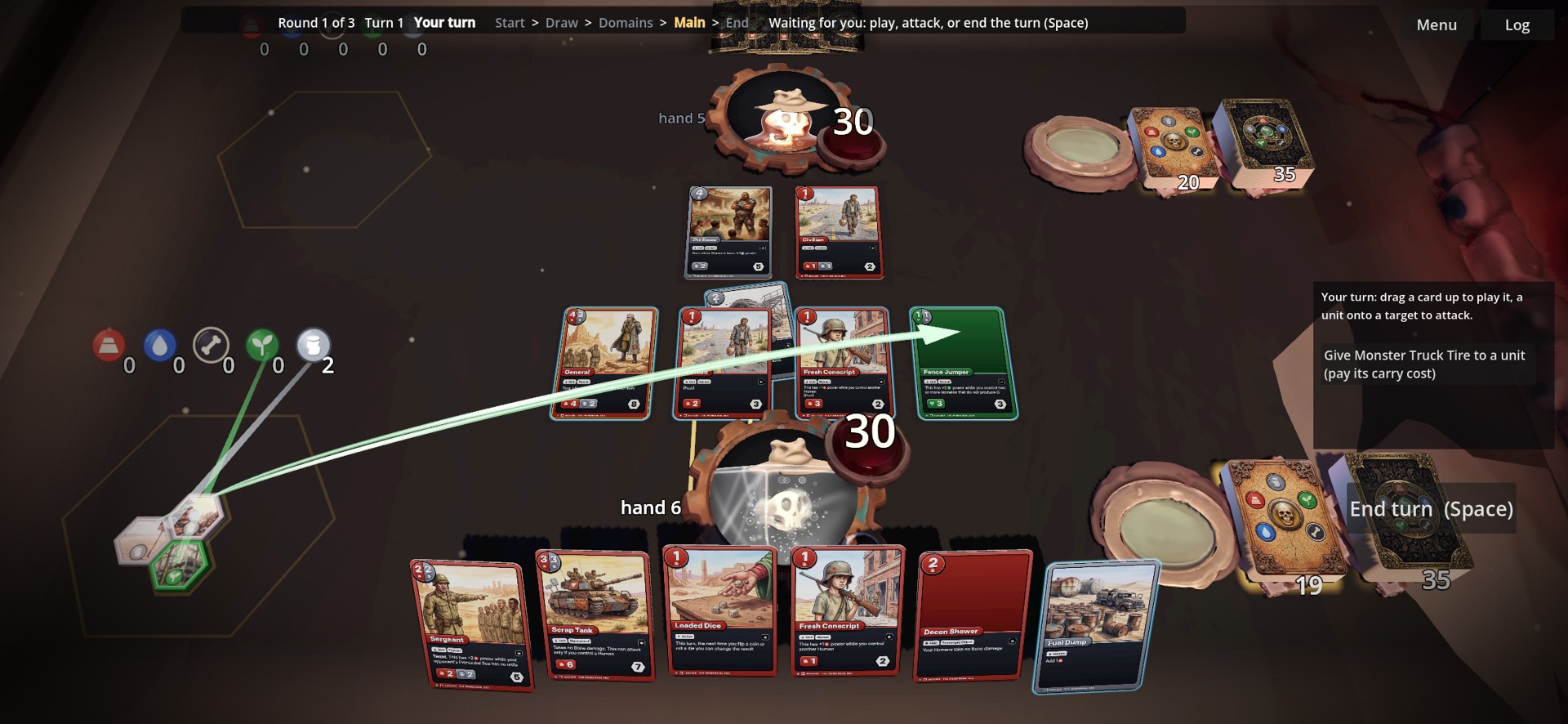
A card battler where your skulls are your spare lives
The player is a mutated jellyfish who finds a skull, chooses a faction, assembles a card deck, and explores ruined North America through towns, ambushes and card-table battles. Five major factions compete over the world. A skull provides a bonus each round; losing the final spare ends the run. Dead units enter the Primordial Sea, where some cards can bring them back cursed. The creator lists 300 base-set cards, booster packs, a binder and eleven ready-made starter decks in the demo work.
Why human playtesting caught what automated checks missed
In the November 21 devlog, the developer explains how triggered card effects happened too fast or invisibly. The revised design gives each triggered event three readable beats: the source card rises and glows, an arrow and caption identify each target, and the outcome remains visible. A 'What happened' recap and a cause-grouped log further help players understand the battle. Human feedback also exposed a rules inconsistency: a removed-from-play unit should no longer trigger effects. These changes are a concrete example of how AI-generated code still needs observable player-facing feedback.
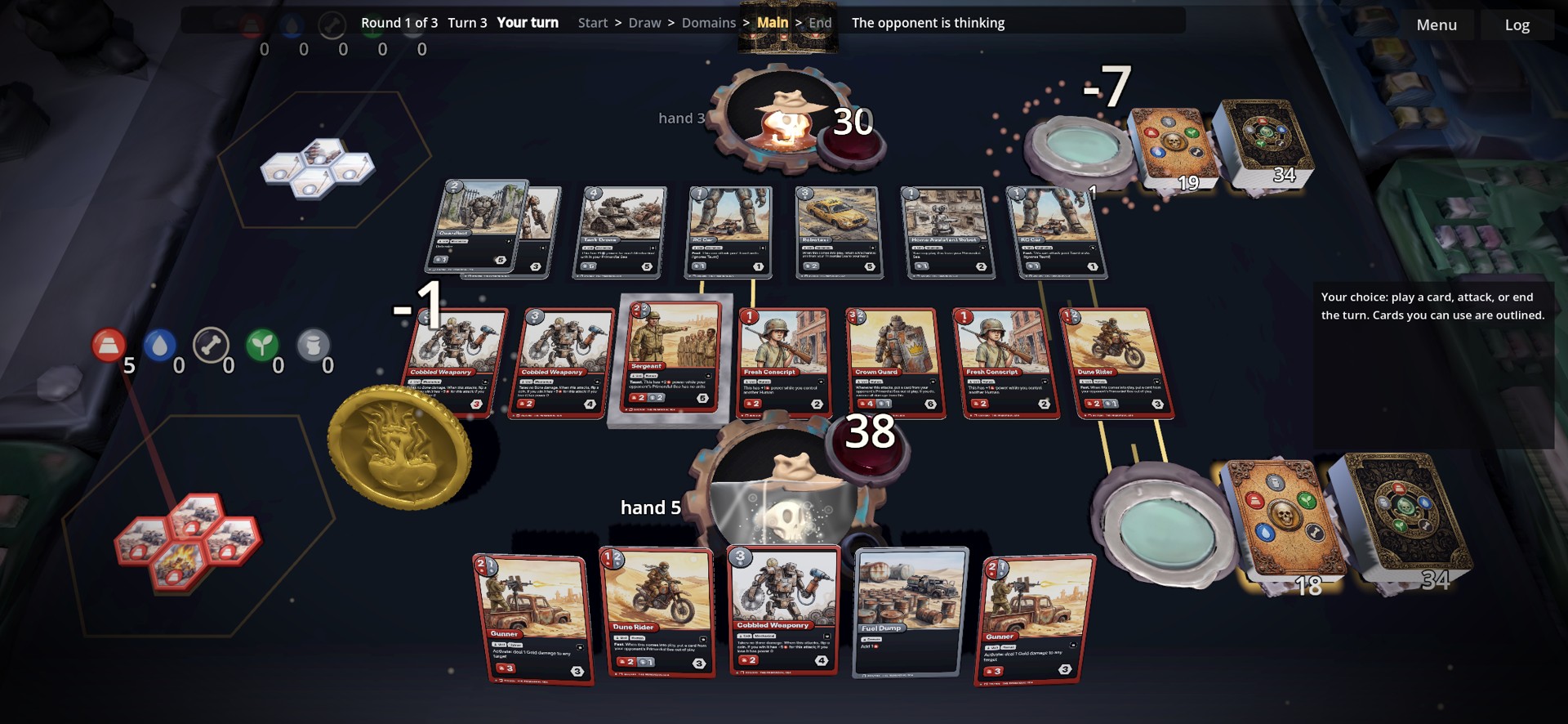
Claude wrote code; a simulator handled thousands of matches; people still decided balance
The game's disclosure states that Claude Code (Fable, Opus and Haiku models) wrote game code, card scripts, rules and the AI opponent, guided by the creator's instructions and reviews. Claude also built a simulator for automated card-battle balance tests. The November 20 devlog reports 2,640 simulated matches, with Biomass-only decks at 60.2% wins and Bone-only at 54.4%, down from earlier reported 87% and 72%. Going first still won 58.6%; the creator identifies that remaining bias rather than calling the balance solved. These numbers are the developer's simulation results, not GameSlash's independent measurements. See the balance breakdown.
The same developer reports optimizing browser match start from 11.1 seconds to 0.9 seconds, the worst frame from 7.4 seconds to about 30 ms, and the download from 115 MB to 56 MB. After music began stuttering in an unthreaded browser build, the team moved playback into the browser's own audio player rather than sacrificing iPhone support. Such changes highlight why cross-device runtime tests matter after code generation.
Access and limitations
The prototype is playable on itch.io in HTML5. The developer explicitly lists current issues: some opponent card actions lack clear explanations, certain returned cards have no visible feedback, initial table loading can pause, and card-hover placement can jitter. The developer says card artwork comes from Nano Banana through fal and Gemini, 3D props from Tripo, music from Suno and licensed sound effects from traditional libraries. This is an AI-assisted development workflow, not a claim that a live LLM generates each move during play. GameSlash did not independently play this build.
For game makers, the takeaway is to run AI-authored rules through simulation, then have a human play the actual UI: check cause-and-effect messages, measure frame times and test browser audio/controls. Play the developer's browser demo.