 GAMESLASH
Hyper3D Rodin adds low-poly generation with edge loops around joints
By GameSlash
Choose a 200–10,000 face target and quads, triangles or n-gons. The release demo shows how the topology follows fingers and other joints.
Hyper3D announced an update to Rodin’s low-poly workflow on November 23. It generates a textured mesh from an image with edge loops placed around joints, a layout artists use when preparing character meshes for deformation. Source announcement
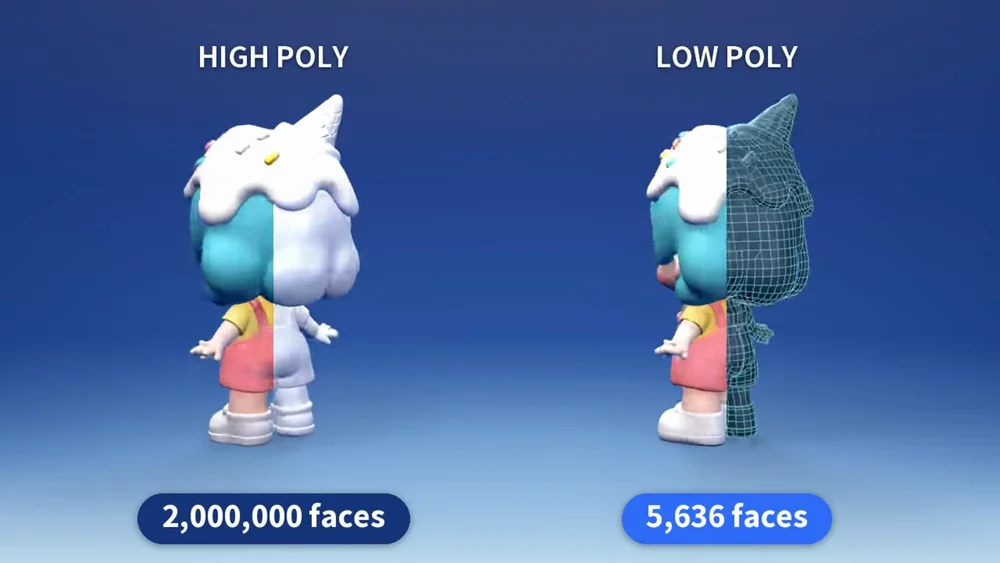
The changelog lists a target range of 200 to 10,000 faces and lets creators choose quads, triangles or n-gons. In one demo, a character shown with 2 million high-poly faces is compared with a 5,636-face mesh.
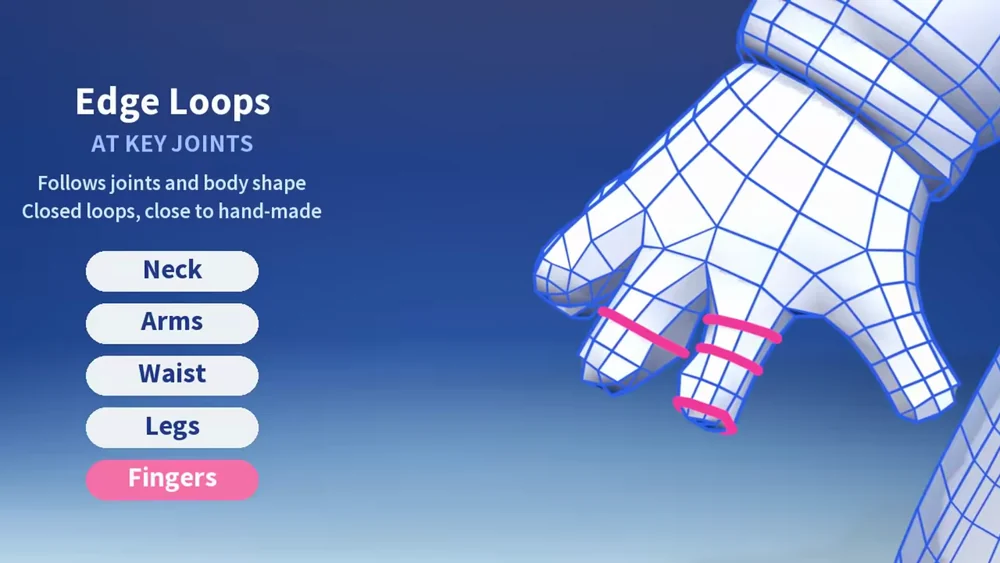
Hyper3D says the low-poly surface aligns with the high-poly version so finer details can be baked into a normal map. For a game character, that means the mesh and the baked surface detail can be evaluated separately before import.
Related on GameSlash • Meng To’s Three.js RPG