 GAMESLASH
Ludo and Claude Code fix floating sprites in Godot: 402 of 404 landings within one pixel
By GameSlash
The November 24 production breakdown reveals how per-frame foot anchors and repeatable bot testing fixed a climbing prototype.
On November 24, 2026, Ludo.ai published new production measurements and asset decisions for Kip's Climb, a Godot prototype whose earlier video appeared on November 14. Ludo generated the artwork and audio, while Claude Code wrote the game code. The team describes a practical way to correct feet that float above platforms.
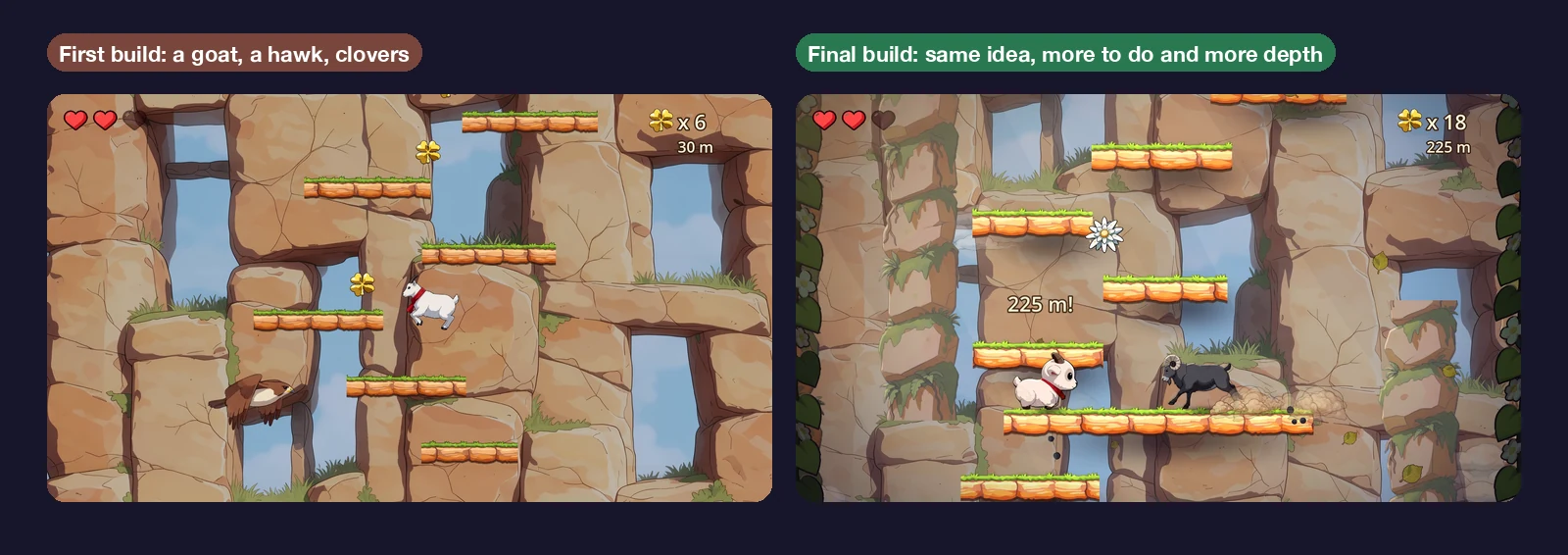
Use a separate anchor for each frame
The original animation contained three hops, which caused airborne and landing poses to appear at the wrong point in a single jump. The team selected one hop and synchronized the takeoff, five airborne frames and landing to the movement arc. The free offline toolbox command ludo toolbox sprite metrics kip_hop.png measured the ground row for each frame; Claude Code used those measurements to adjust drawing offsets independently of movement.
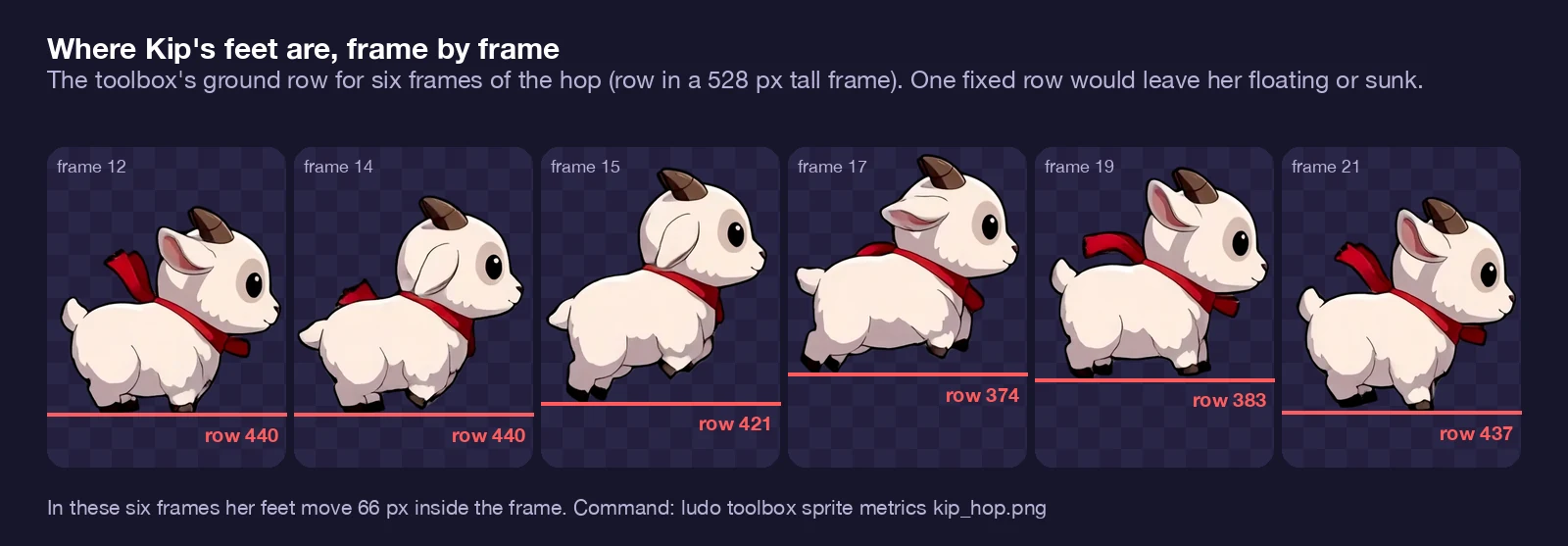
The team says a repeatable demo bot yielded 5,313 grounded frames over 404 landings. In 402 landings, the error was within one pixel; two were within two pixels. The three builds involved 44 generation requests and 108 Ludo credits, excluding Claude usage and staff time. These are Ludo's own measurements. There is no public player-controlled build. Read the original production breakdown for the checks and example code.