 GAMESLASH
Meshy API adds quadruped rigging for AI game animals, with walk and run animations
By GameSlash
Meshy's Nov 18 API update lets developers rig four-legged 3D animals, apply compatible motions and export FBX/GLB for game engines. Here is the workflow and its limits.
Meshy updated its developer API on November 18, 2026 to rig four-legged animals. By specifying `animation_type: "quadruped"`, a creator can now send a textured animal model to the Rigging API and obtain a skeleton with basic walk and run animations, then apply compatible clips through the Animation API. The exact event is recorded in Meshy's official November 18 changelog. This is a new API capability, not an announcement of a new Unreal plugin.
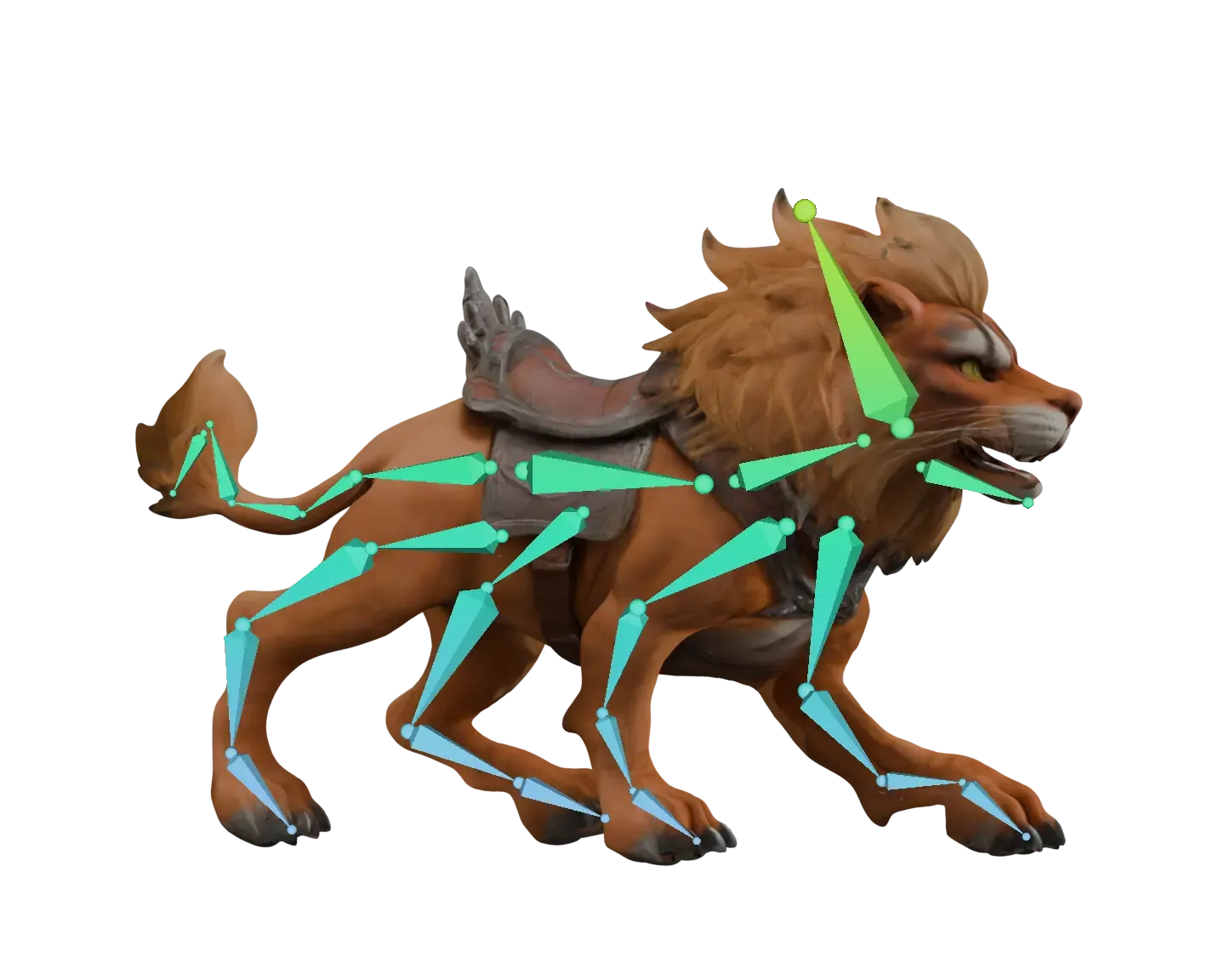
The workflow for animal companions and mounts
Start with a textured GLB depicting a four-legged character, such as a pet, enemy or mount. Ensure the animal faces the +Z axis and that the mesh stays at or below 380,000 triangles. Make a POST request to `/openapi/v1/rigging` with a public `model_url` (or an earlier Meshy task ID) and `animation_type: "quadruped"`. Fetch the task result after completion. Meshy provides FBX and GLB rigged outputs and, when successfully generated, basic walk and run files. Rigging request and output reference.
Then query the animation library and choose actions whose `rig_type` is `quadruped`. Send `rig_task_id` with `action_id`, or merge multiple compatible clips using `action_ids` in `/openapi/v1/animations`. A quadruped rig will reject biped animations rather than automatically retarget them. The result can be exported to an engine, where the team must still set up transitions, root motion, collisions and gameplay timing. Animation API reference.

Why the rig type matters in a game pipeline
An AI coding agent building a game no longer has to assume every generated character takes a humanoid skeleton. For a dog, cat, horse or other four-legged asset, it can set the explicit rig type, filter motions by matching rig type and check whether both base clips were actually returned. Meshy documents that a rigging task can complete successfully even when a basic animation URL is empty; a pipeline should validate each returned file instead of treating the task status as proof that every motion exists.

Limits, pricing and access
The API requires prepaid credits and an eligible paid account. Documentation lists the same price as biped rigging: five credits for a rigging task, with subsequent animation tasks charged separately; check Meshy's live pricing table before estimating large batches. Input must be a textured GLB; `skeleton_template` and `include_fingers: true` are not supported for quadrupeds. This official release has not been independently API-tested by GameSlash.
The practical change for AI-assisted game development is a reproducible path from a four-legged 3D model to a rig, filtered motion clips and game-engine import—not a promise of production-ready locomotion with no cleanup. Read the full API changelog and rigging rules before using it in an automated asset pipeline.