 GAMESLASH
Pudding Escape tests Astra and Opus on 48 identical game states with replay verification
By GameSlash
ODDBOUT's November 22 experiment compares one move at a time in a deterministic physics runner and publishes a reusable test harness.
On November 22, 2026, ODDBOUT published a new comparison of AI decisions in Pudding Escape: Super Jelly. The developer reconstructed 48 identical game states, then asked GPT-6.2 Astra and Claude Opus 5.5 to make one move each. The public benchmark report is a useful example of how a game developer can isolate timing decisions rather than compare unrelated playthroughs.
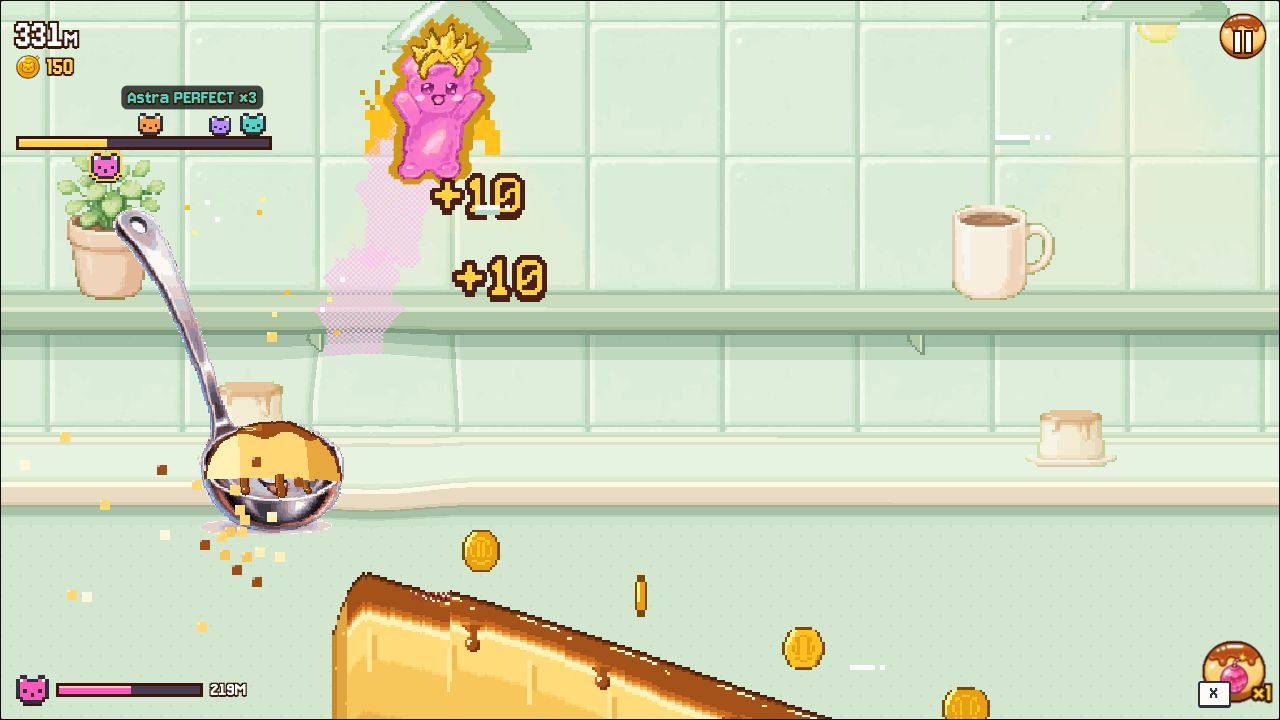
How to make two agents face the same decision
The one-button runner involves charging, releasing to jump, and diving toward a slope. ODDBOUT records a seed and a sequence of earlier inputs, replays them to the same state, supplies the physics rules and numerical observation, and pauses game time while the model responds. After the model chooses one action, the same reference bot takes over. Each case ends after three game seconds or capture.
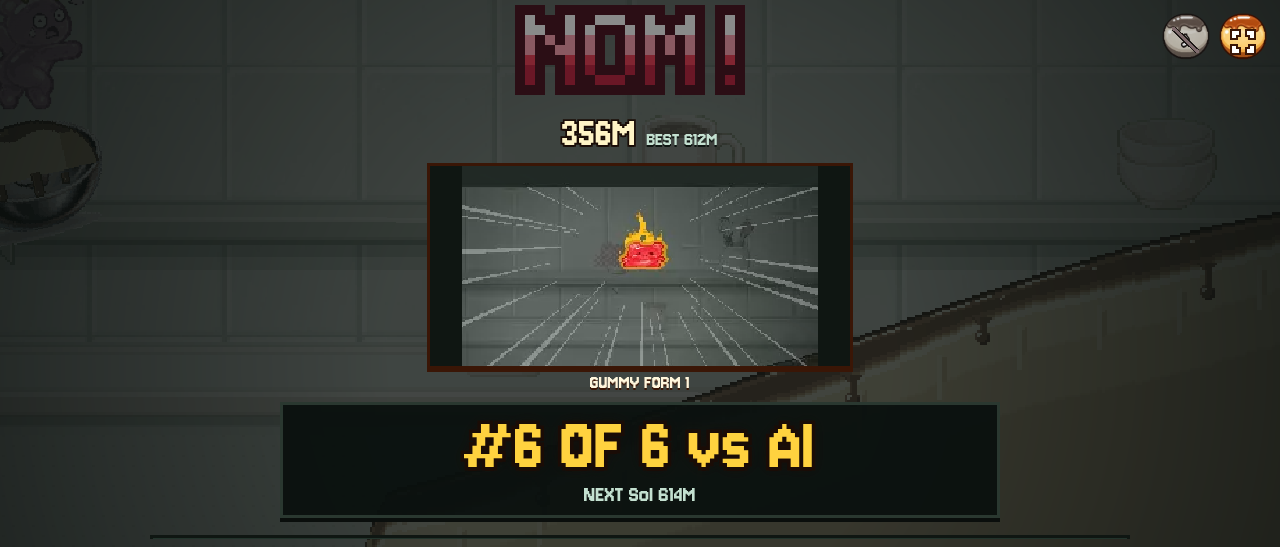
The 48 cases are split evenly between ground timing, airborne timing, recovery after a bad landing and close pursuit. Astra averaged 98.4 m against Opus's 92.6 m; the heuristic bot averaged 98.8 m. Astra survived 35 cases and Opus 33. The developer's reported paired 95% interval for the distance advantage spans −0.2 to +12.7 m, so the overall difference is not conclusive. These are the developer's results, not a GameSlash benchmark.
Reuse the test pattern in your own game
The open benchmark repository includes the deterministic simulator, scenario builder and replay verification commands. For a physics platformer or action game, record the starting seed and inputs, define one action schema, and measure a fixed time window using the same follow-up policy for every agent. This makes a timing regression reproducible. The browser game is available to play; its developer discloses AI assistance in coding, promotional art and audio.