 GAMESLASH
Retake! lets an AI-built stunt-game Director rewrite takes live; creator details 37 regression checks
By GameSlash
Retake! is a co-op stunt-film game built with Claude Code and Tripo. See how its Director rewrites scenes, plus the real bugs behind 37 developer-reported tests.
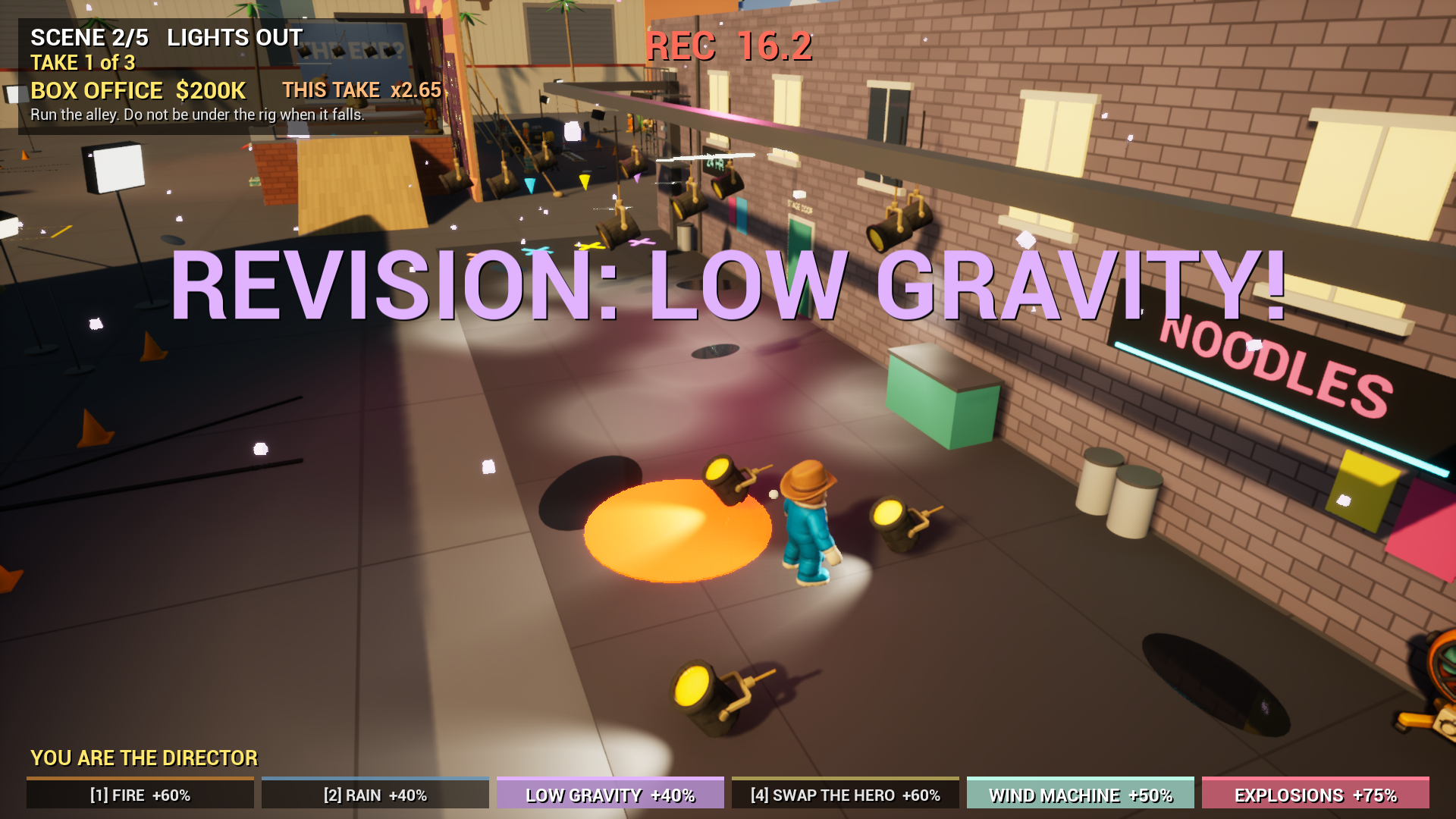
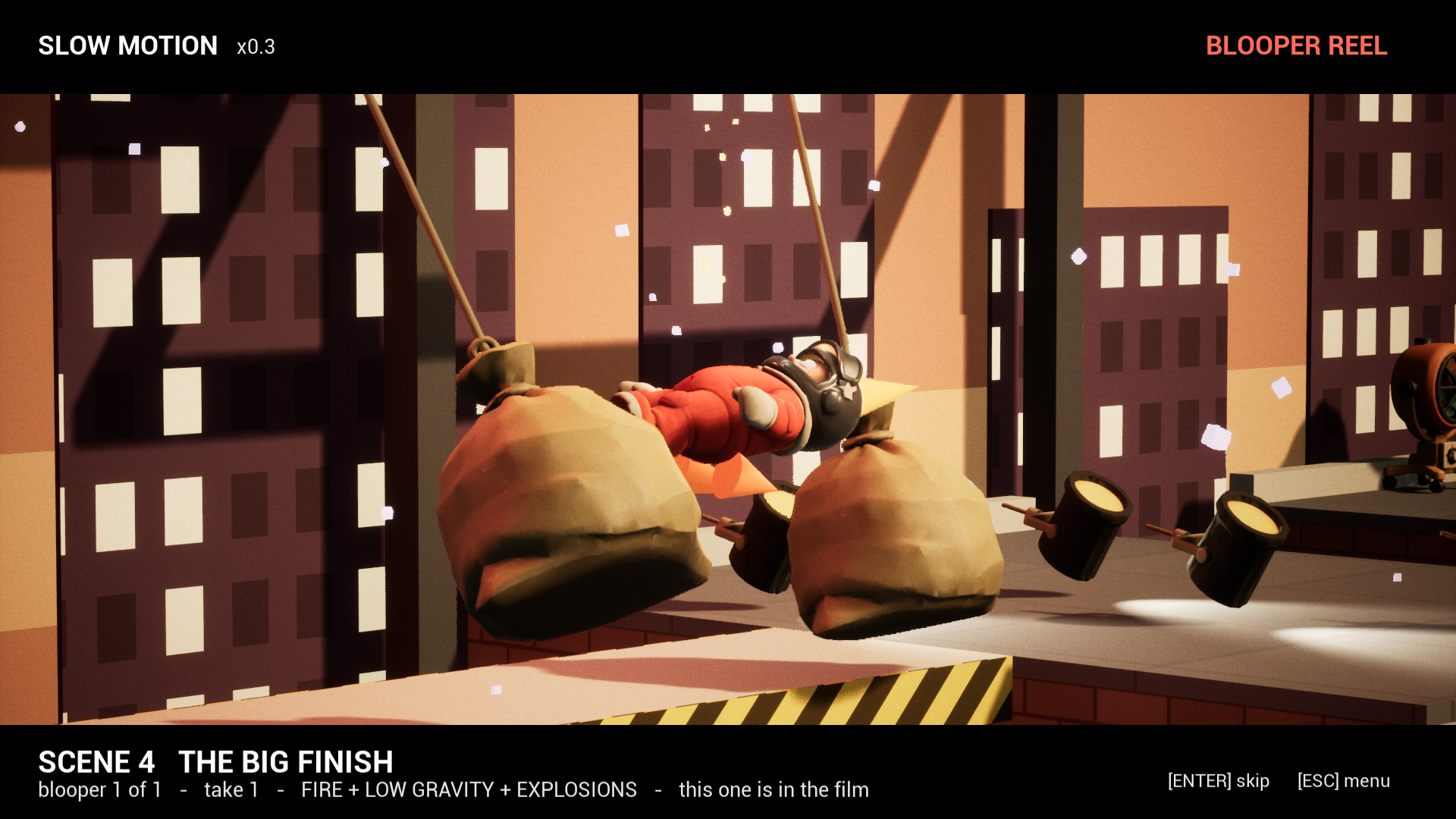
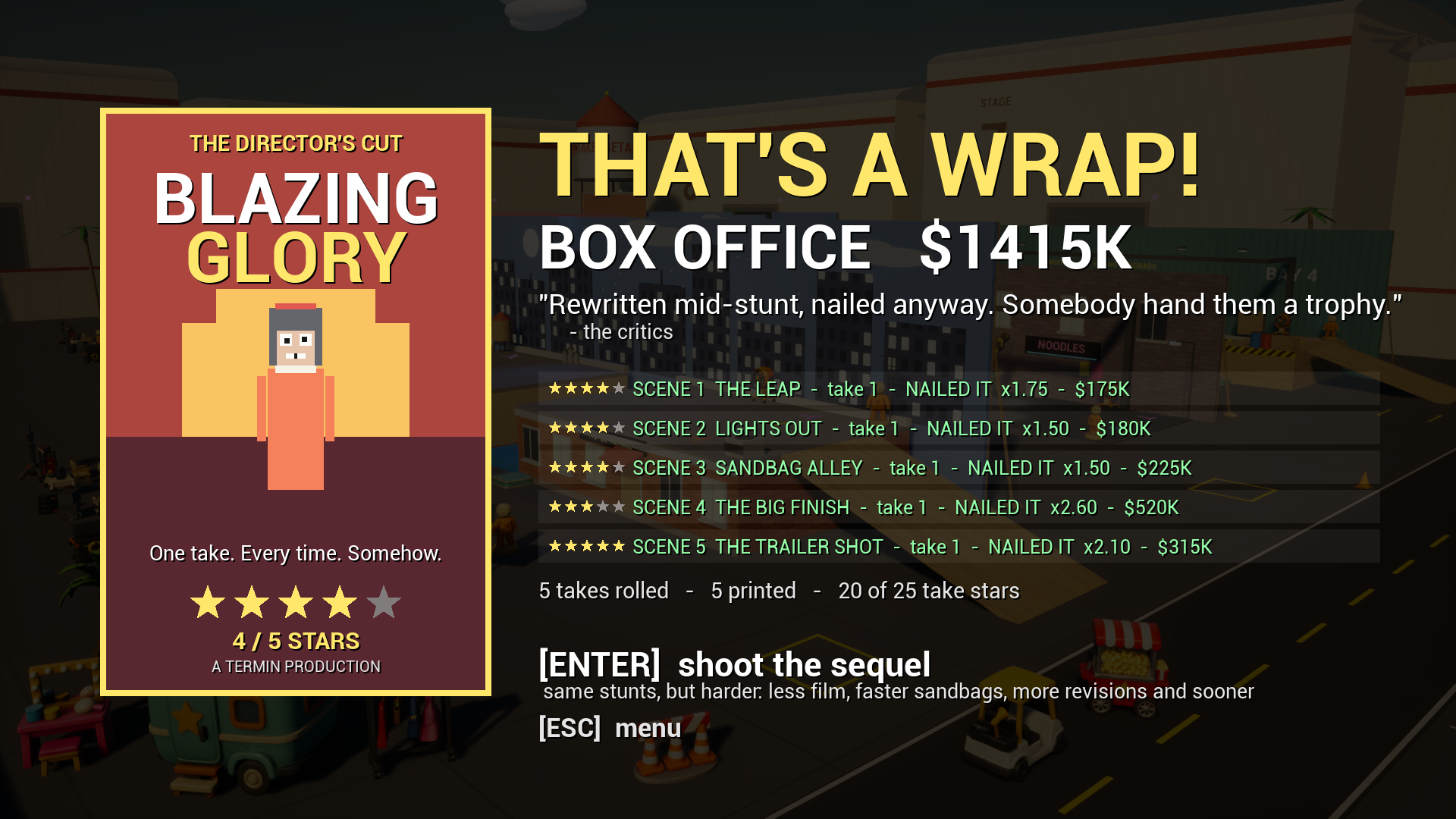
Retake!, a free Windows stunt-comedy game released on November 15, 2026 for the Epic AI MegaJam, turns film direction into its main mechanic. A Director can interrupt a stunt while the camera is rolling with FIRE, RAIN, LOW GRAVITY, SWAP THE HERO, WIND MACHINE or EXPLOSIONS. Players decide whether to PRINT a take into the final movie or shout CUT and retake it. At the end, the chosen footage becomes a screening, with a movie poster, critics' review and slow-motion blooper reel.
One human directing a small AI production team
The solo entrant, Termin72, documented the workflow on November 15. Claude Code wrote Unreal Engine 5.9 C++ gameplay, the script that assembles the set, audio synthesis scripts and automated tests. A coordinator named Game Dev managed tasks and model orders. Tripo produced four stunt-actor models plus 46 props, with six simplified in Blender. The human developer selected the concept, played builds and approved the final work.
Instead of a continuous conversation, the coding agent read structured files: JAM_BRIEF.md defined requirements; TO_CLAUDE.md recorded requests; PROGRESS.md collected builds, verification gates and unresolved failures, exceeding 2,800 lines according to the creator. A guard script restricted tool operations to the project directory, refusing off-limits paths and destructive attempts. The first packaged two-client listen-server test was an early milestone.
What automatic tests found — and what they missed
According to the developer's own report, the submitted Shipping build passed 37 regression checks with no failures and a further five checks on a fresh unpack of the submitted ZIP. Scenarios included simulated 100 ms and 250 ms lag, revision combinations and a player leaving mid-take. These tests ran as windows/processes on one computer; the developer did not validate two physically separate PCs over a real internet connection.
Early tests slowed to about 22 FPS after a launcher was closed but real game processes stayed alive. Fixing the test harness mattered as much as fixing the game: the agent changed process cleanup to target the actual executable. Another test recorded nine late jump inputs among eleven failed finale takes; the team added 0.15 seconds of coyote time. A person then found six further issues, including camera sensitivity and crucial PRINT/CUT audio becoming hard to hear.
The scene you create is also the film you watch
There are five stunt setups, with up to three takes for each. One player can control the stunt performer or sit in the Director's chair. The game also advertises two-to-four-player co-op. The result screen turns successful printed takes into a fictional box office total and reviews, then replays the worst falls as movie bloopers. The available gamepad controls remain marked experimental, and the creator says real gamepad and cross-PC online testing were not completed.
A usable workflow lesson
For developers, the transferable sequence is: write an explicit design brief, log every AI change and test gate, constrain filesystem access, verify the actual packaged build, inspect whether the test rig itself is creating bugs, and run human playtests after the automated checks. Treat reported test numbers as the developer's evidence, not an independent certification that online co-op is trouble-free.
Play and inspect the sources: Retake! Windows download · November 15 making-of devlog · official Epic AI MegaJam submission.