 GAMESLASH
Claude builds 30 Viking game props with Blender Python and one 64×64 palette
By GameSlash
A November 22 CC0 kit documents 25 Blender Python blocks, a procedural longship, 8,558 triangles and export checks game makers can reproduce.
On November 22, 2026, the creator of the Left It Running account released a free, CC0 Low-Poly Viking Village Kit and published a detailed breakdown of how Claude generated its Blender geometry with roughly 25 blocks of Python. Unlike a simple AI asset upload, the post documents specific procedural mesh methods, scene mistakes and export checks that game creators can reproduce. Read the November 22 devlog.
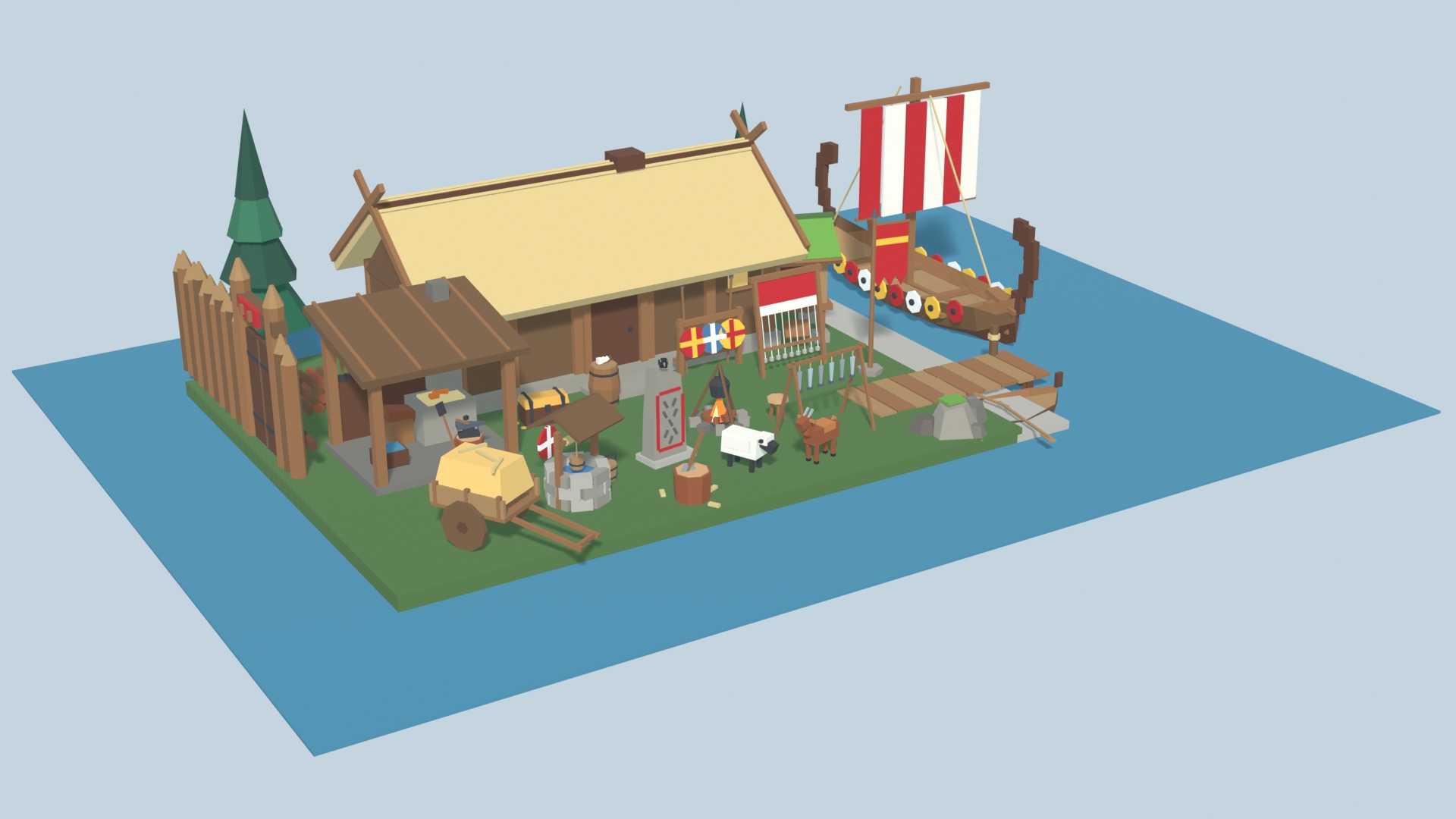
One shared palette and procedural Python models
The developer says the pack contains 30 individual assets, including a longship, longhouse, smithy, storehouse, palisade, rune stone, props and animals. Claude wrote one Blender Python block per model or small group of props, coloring each face by placing its UVs on a cell of a single 64×64 color palette texture. That avoids separate large texture maps for every item and keeps the low-poly look consistent.
The longship was built from seven hull cross-sections joined into a loft. Eighteen shields were positioned along its side using the hull width at each location, while the sail uses six curved strips to suggest wind. For the longhouse roof, the script pulled top corners of block-like gable walls into a ridge. These are examples of procedural modeling instructions, not evidence that the AI independently tested a game.
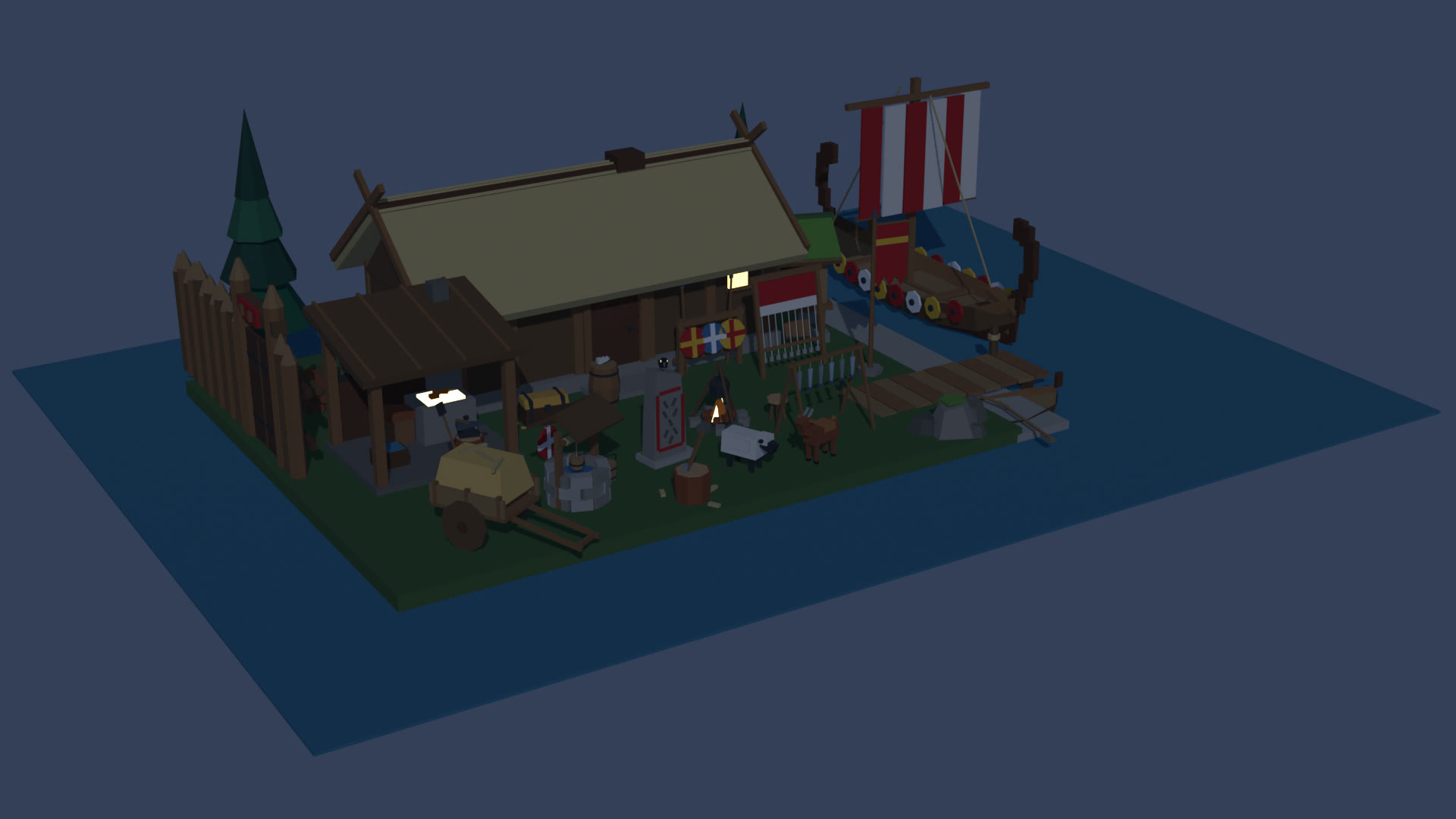
The important part is checking geometry, not just generating it
The creator documented two concrete placement mistakes: a smithy's roof overlapped a longhouse corner, requiring a half-metre move, and a raven landed inside the rune stone because the script read the stone's top incorrectly. According to the release notes, 90 exported files were re-imported into a clean Blender scene to check their scale, origins and textures. The author reports 8,558 triangles across all 30 models, ranging from 64 to 1,330 triangles per asset; these are developer-reported values, not independent GameSlash measurements.
What is actually included, and can it be used commercially?
The downloadable kit includes GLB, FBX and OBJ models, plus a .blend scene, with one shared palette material and an additional glow mask. Jetty sections are designed to connect at four-metre intervals and palisade sections at three metres. The developer has marked the pack CC0 and free, including commercial use. The shop description explicitly says the files were produced with Claude-generated Blender code; a human uploads them. That matters for readers deciding how to source assets.
For an indie-game workflow, the practical sequence is: define mesh construction and a common palette, generate in Blender with code, re-import the exports to verify dimensions and textures, then check collisions, navigation and scene performance in the target game engine. A model pack is not a finished game level. Download the pack and review the CC0 statement.
Related GameSlash coverage: Ludo Asset Toolbox checks sprite and model assets before engine import..