 GAMESLASH
Skywork releases Matrix-Game 4.0 to render three playable game scenes with AI
By GameSlash
Matrix-Game 4.0 opens source for three game scenes whose rules run in a normal engine while a video model renders the visuals. Its developer benchmarks require careful reading.
Skywork AI released open-source Matrix-Game 4.0 on 15 October 2026. Instead of having an AI model invent a game's rules from pixels alone, the system keeps gameplay and physics inside a real low-poly game engine and uses a causal video model to transform its frames into a richer-looking scene. Three executable scene profiles are supplied: Medieval Castle, Ancient Egypt and City Racing.
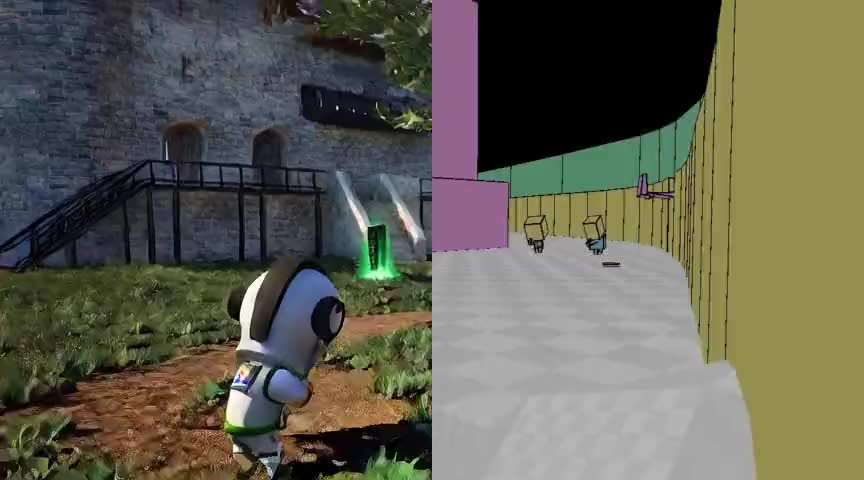
Three playable scenes, not an unrestricted world generator
The release README describes two first-person shooter environments and a racing game. The engine handles player actions, collision, NPC rules, sound and UI. A browser preview can stream output via WebRTC, but it runs from a locally configured Linux server and is not a hosted public one-click game.
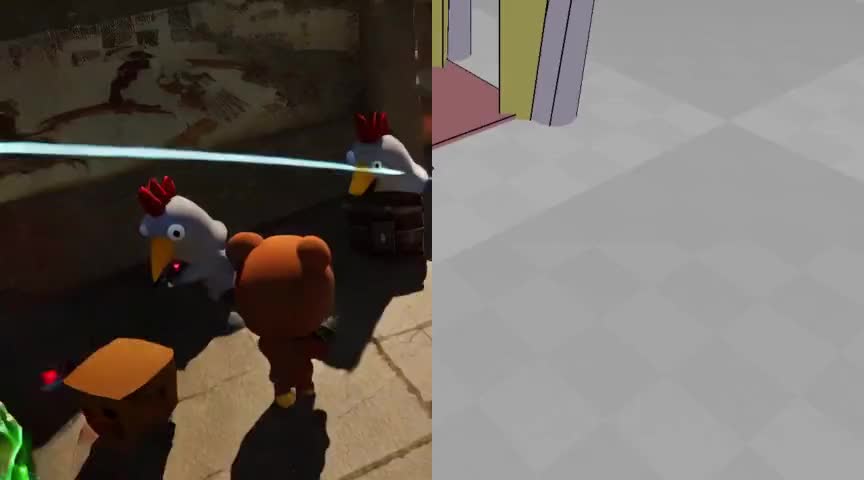
In the racing profile, the game can update its scene descriptions as the car moves. That connects player-controlled game state to the model's visual output, rather than relying on an unstructured stream of generated video.
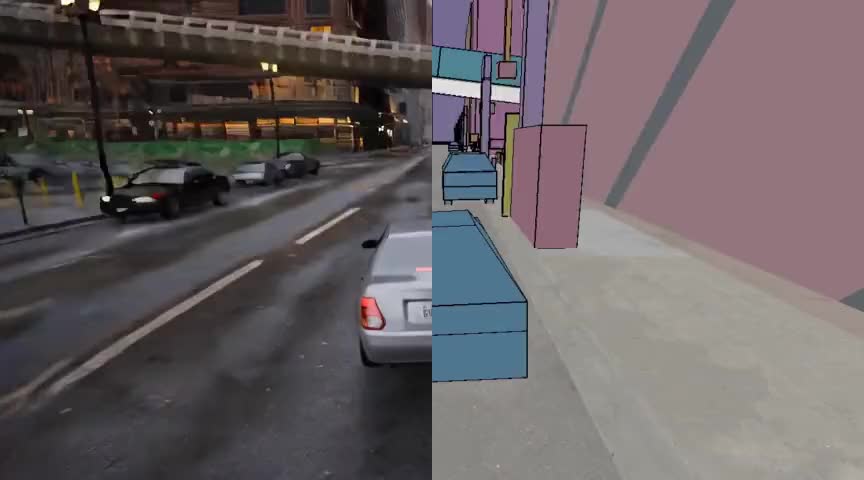
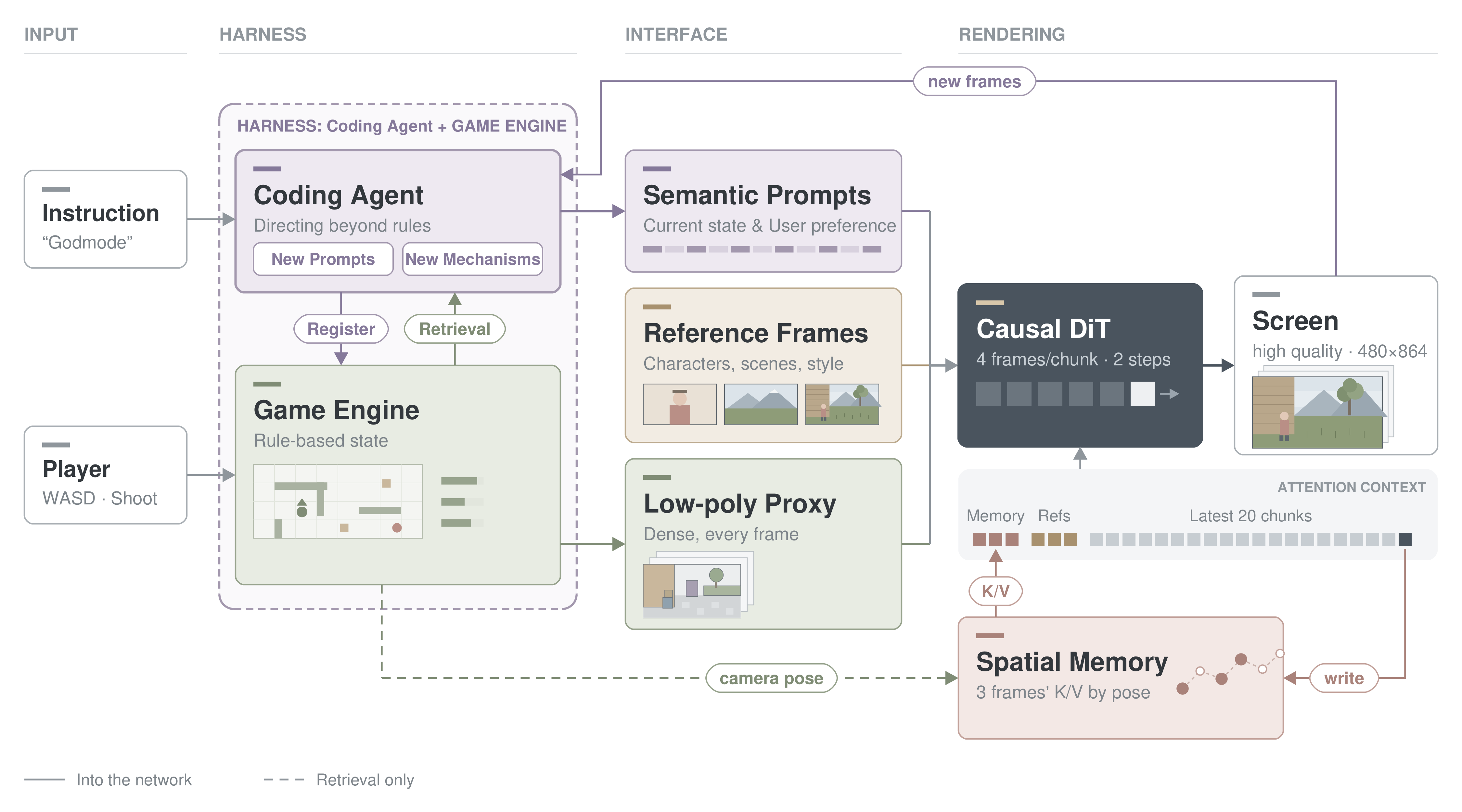
A conventional engine owns the rules; the AI paints the frames
The game's engine maintains persistent state and renders a low-poly proxy. A Coding Agent is designed to turn player instructions into rule changes and text prompts; the video model reads the low-poly stream, reference frames and state descriptions before rendering. The official architecture explanation describes a rolling cache and spatial memory to improve consistency.
Hardware, benchmark claims and open-source boundaries
The open model card lists scene-specific models with around 5.0 billion parameters each, along with downloadable game assets and code dependencies. The README's tested reference setup is Linux, Python 3.12 and an NVIDIA A100 80 GB. It reports roughly 38–39 FPS of model or server-side processing for fixed-prompt scenes at 864 × 480—not FPS measured on a player's browser.
The promotional project page advertises 83 FPS and 112 ms action response for an RTX 5090 configuration. However, the release documentation says RTX 50-series inference optimizations were still planned, and expressly does not guarantee consumer-GPU performance. These differing figures are developer claims under different conditions; GameSlash has not reproduced them.
The source is available, but scene checkpoints are specialized to their training geometry. The model card's limitations warn of drifting appearances and geometry errors under unfamiliar camera movement or long sessions; the system does not change collision or gameplay via its neural renderer. Related reading: the earlier open-source Tencent Game-Creation-Agents project uses multiple agents for a different part of game creation.