 GAMESLASH
Day Zero
By Bong Palathon
Plan each day's activities, weigh supplies against energy and handle shelter events in a decision-based survival game where every item has a cost.
A locked storeroom might contain supplies, but forcing it open costs energy and makes noise. Bong Palathon's Day Zero turns a survivor's day into decisions about food, scavenging and shelter, with companions and limited resources to keep alive together.
Read the supplies before choosing the day
Health, satiety, hydration, energy, morale, warmth and noise sit beside shelter statistics and inventory. Activities show an energy cost and require a separate action confirmation, making their immediate demands visible before the day advances.
Stockpiling does not simply increase every resource. The log distinguishes processing fresh food into cans from preparing water, while fortifying shelter can improve concealment and generate noise at the same time. Survival is about balancing these effects rather than repeating one universally best action.
Missing materials remove an option
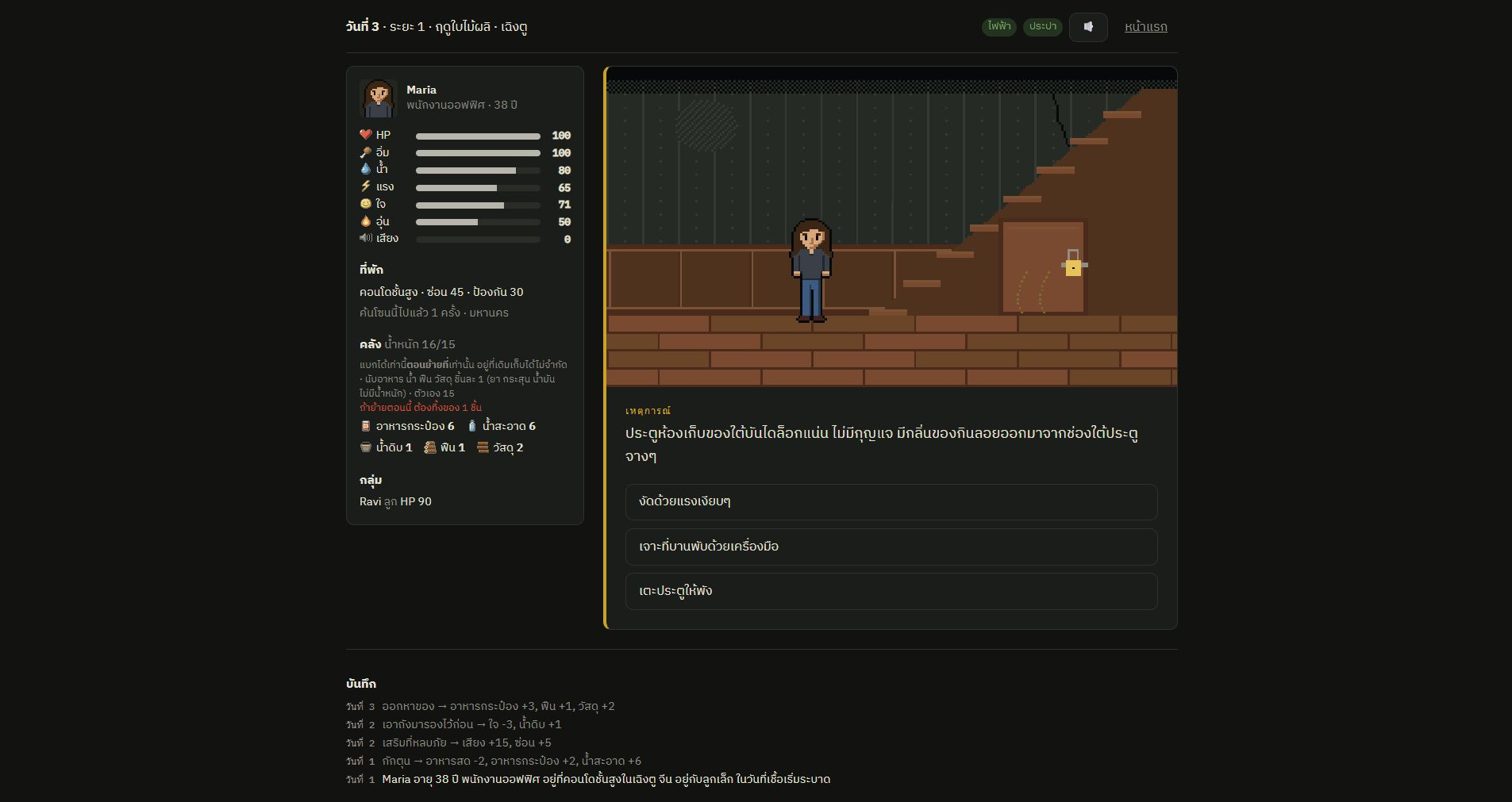
A leaking-ceiling event offers a repair, a bucket or moving possessions into a dry corner. Without materials, the repair option is disabled. Choosing the bucket resolves the immediate decision differently, with raw water and a morale change recorded in the log.
The small pixel scene gives the problem a setting: a survivor, a room and a visible leak. Choices remain beside the supply panel, keeping the situation and available resources in view together.
More loot is not always easier to carry
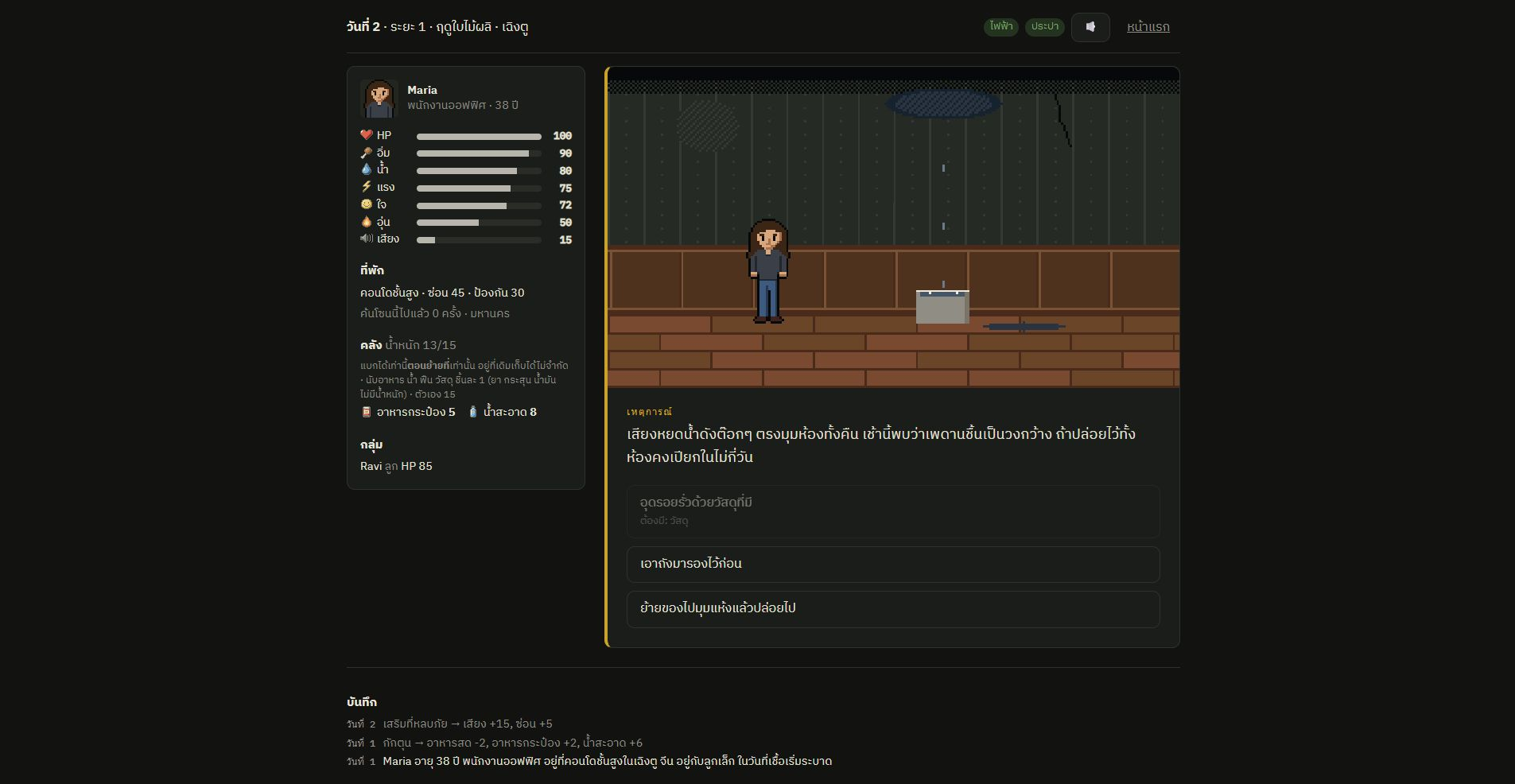
Scavenging an abandoned house can yield supplies, firewood and materials while spending energy. An inventory reading of 16/15 explicitly warns that moving would require leaving an item behind. Loot therefore has a different value when staying put than when preparing to relocate.
A locked-door event offers several approaches. Even the quieter forcing option produces energy and noise costs in its result; its label is not a promise of silence. Reading the outcome matters as much as choosing the action.
The next morning totals the previous day
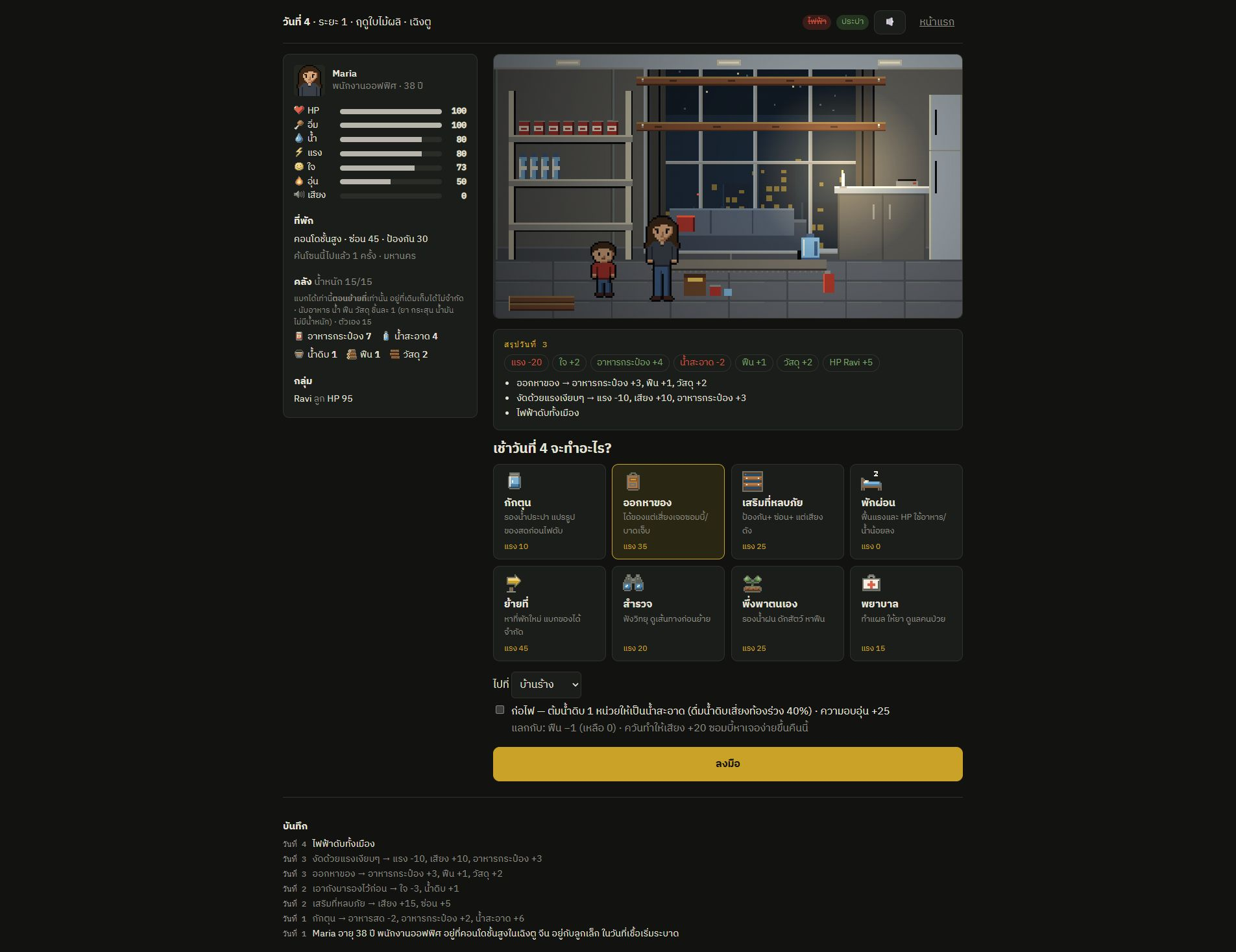
The daily summary combines activities, events and overnight consumption before presenting another set of choices. Supplies gained during the day are not the same as the following morning's net stock, and companion health is tracked separately from the main survivor.
In the illustrated sequence, a citywide power failure appears in the log and changes the electricity indicator, while inventory and activities remain available for planning. Starting lives and events vary, so the current figures matter more than treating one reward amount as a fixed recipe.
Day Zero suits players who enjoy survival through information and trade-offs rather than real-time zombie shooting. Its pressure comes from practical questions: should energy be saved today, is there enough water, and is the current load worth taking when it is time to move?
This game is hosted on its creator’s website. gameslash collects information and links to help you discover games.
View source