 GAMESLASH
Jar Garden debuts a tiny terrarium sim with Google Flow art and AI-assisted code
By GameSlash
Published November 4, Jar Garden lets players balance air, humidity, moss, snails and fireflies. Its maker openly details which art, code and text were AI-assisted and which audio was not.
On November 4, 2026 at 10:08 UTC, developer Gianne Angely released Jar Garden, a browser-playable miniature ecosystem simulator built with Phaser 3.90. Players manage a glass jar rather than an ordinary flowerbed: light, air, humidity, moss and small creatures form an interdependent system.
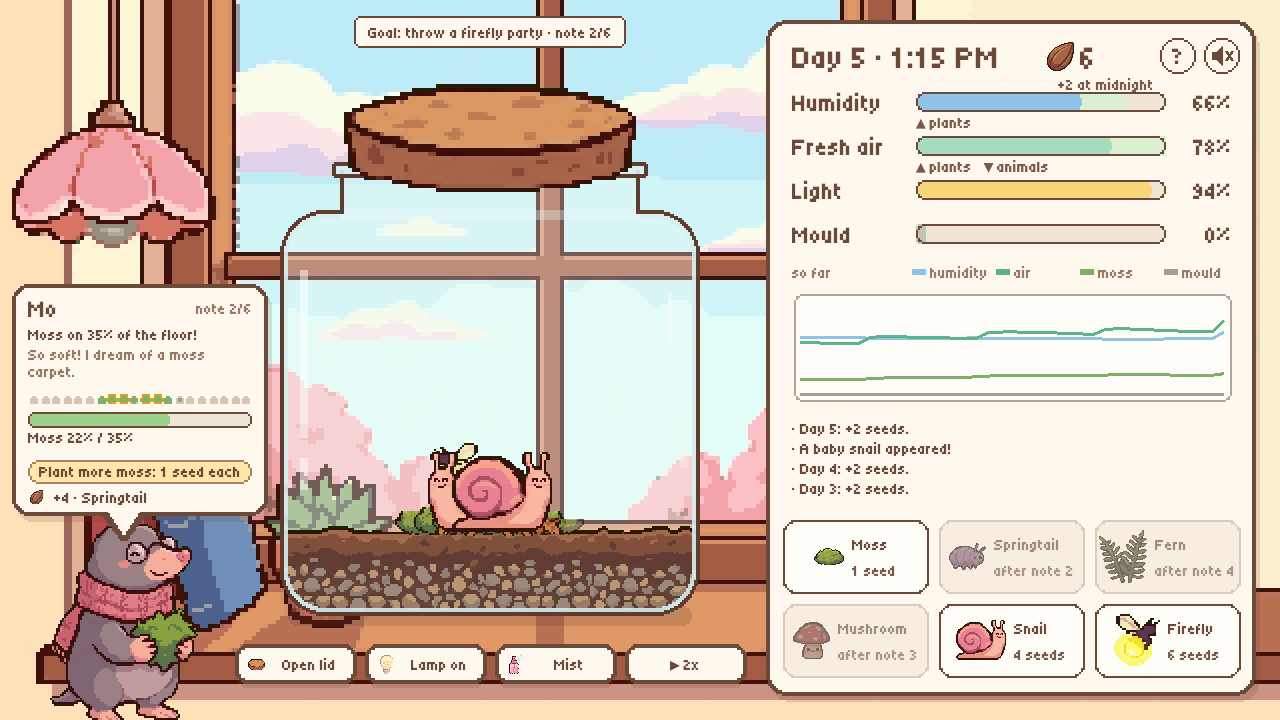
Small choices change the whole jar
Moss and ferns produce fresh air in light while animals consume it. Opening the lid exchanges air but dries the jar, and too much moisture allows mould to grow. Snails consume leftovers and moss; springtails consume mould; mushrooms help clear waste; fireflies need darkness and a healthy damp moss carpet. Players can inspect creatures to understand what each needs.
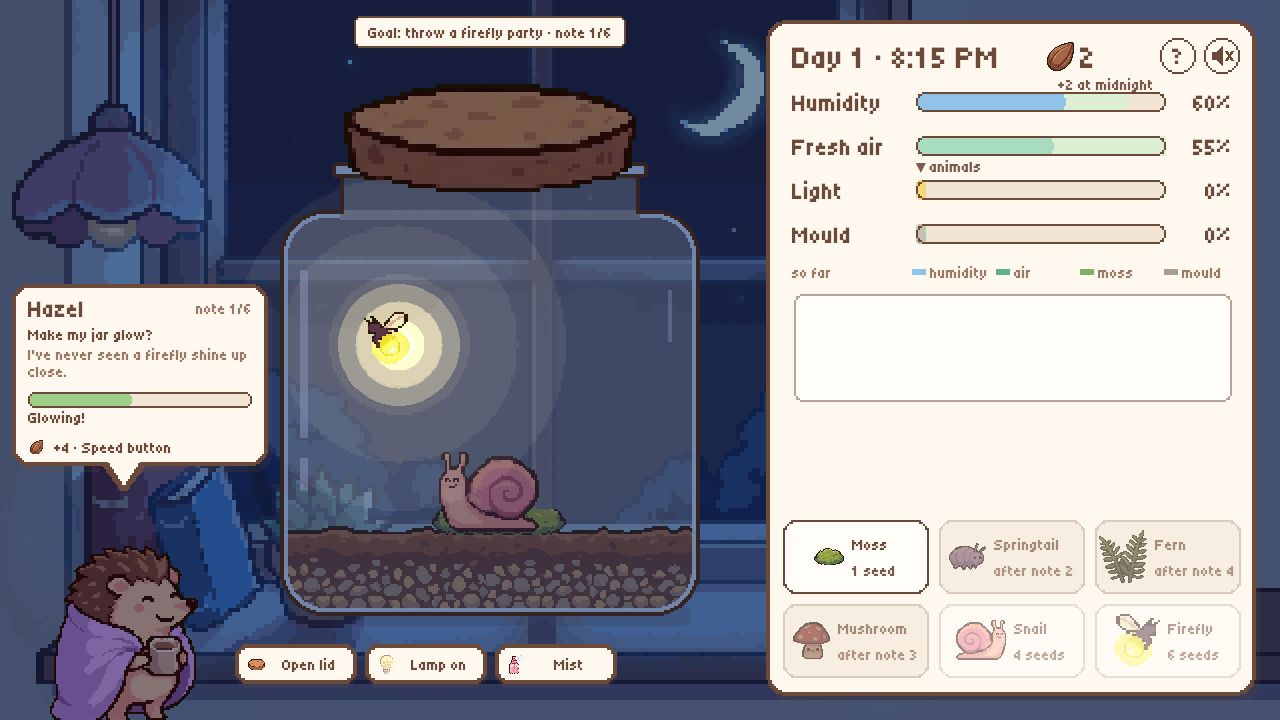
Six notes, a firefly party and a short play session
Six neighbour requests lead from the first glowing firefly toward a celebration. Players can adjust the lid, lamp, mist and time speed, and the developer describes a complete run as roughly five to eight minutes. The released HTML5 game uses mouse or touch; this is a creator description, not a GameSlash playtest.
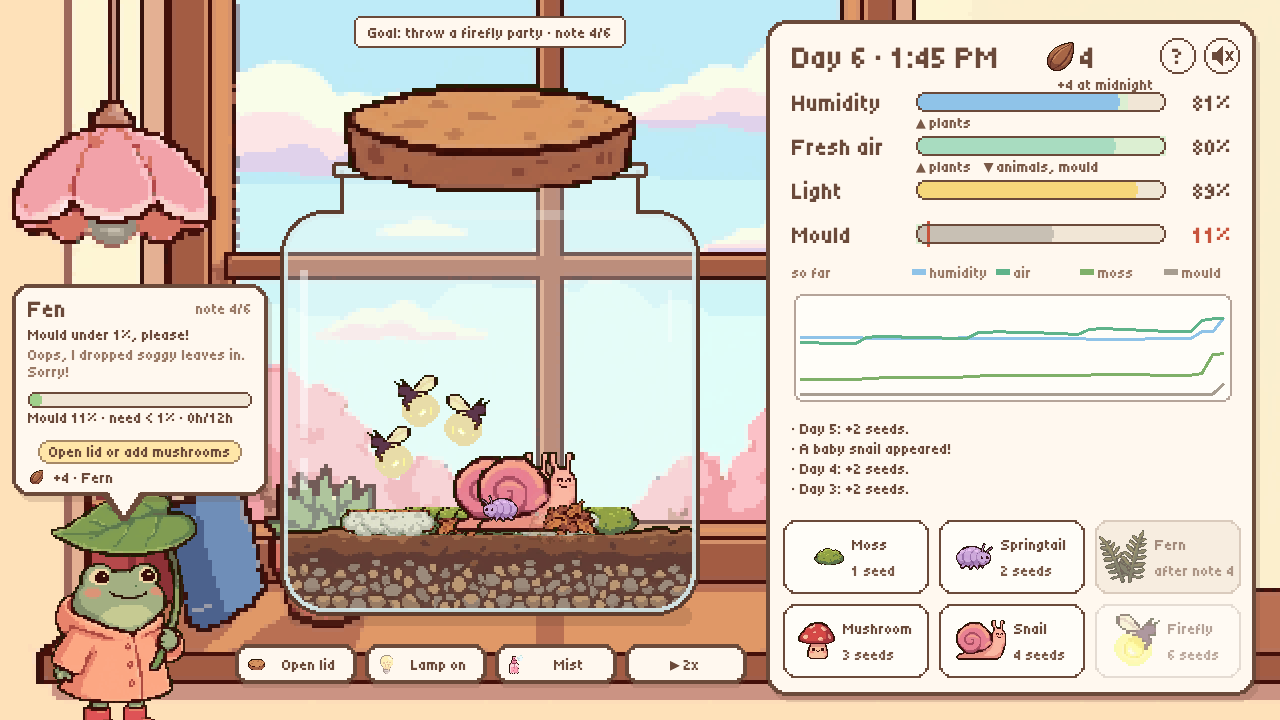
AI disclosure: art and code, not the soundtrack
The developer says illustrations of creatures, rooms, icons and title elements were generated with Google Flow from their own style references and assembled into the game; the jar, interface and effects were drawn in code. Code and text were AI-assisted. Music and sound effects were sourced instead from credited CC0 or public-domain collections. The demo is a concrete example of mixing AI-made assets with hand-built game systems.
Official source and AI disclosure: Jar Garden on itch.io.