 GAMESLASH
Pixel Art Atlas releases 1.4 million 16×16 sprites made with Krea 2
By GameSlash
Angais published a collection of transparent pixel art sprites with captions. Browse individual assets and extract them for game prototypes.
On November 6, creator Angel (@Angaisb_) announced Pixel Art Atlas, a collection of 1,409,404 synthetic game sprites on Hugging Face. The images were generated with Krea 2 Turbo and a custom pixel art LoRA. Angel said the dataset came out of an attempt to train a pixel art model from scratch that proved too expensive to pursue.

The dataset card describes native 16×16 sprites with transparent backgrounds, paired with English captions and subject labels. The data is split into 1,405,308 training images and 4,096 validation images. Captions generally reflect the prompts, so details can differ from the image. A candle requested unlit, for example, can still appear with a flame.
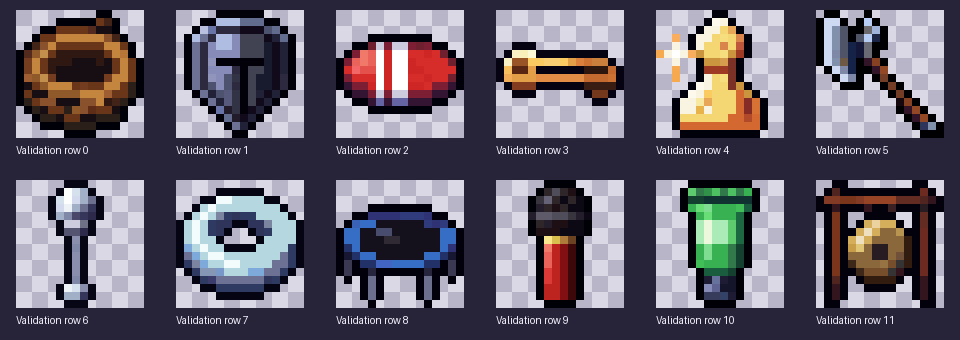
For a game prototype, start in the Hugging Face viewer and look for sprites with matching outlines and shading, such as a shield and axe for an inventory screen. The dataset stores individual images in Parquet. Its Python example streams rows as RGBA images, which can be saved to PNG and packed into a texture atlas. For animation, see GameSlash’s guide to arranging frames into a sprite sheet.
Angais dedicates the sprites, captions and collection under CC0 1.0 to the extent of the rights they can waive. The dataset card also flags third-party rights and links to Krea’s license terms for commercial use. The release contains the generated images and labels. It does not include model weights or the LoRA used to generate them.